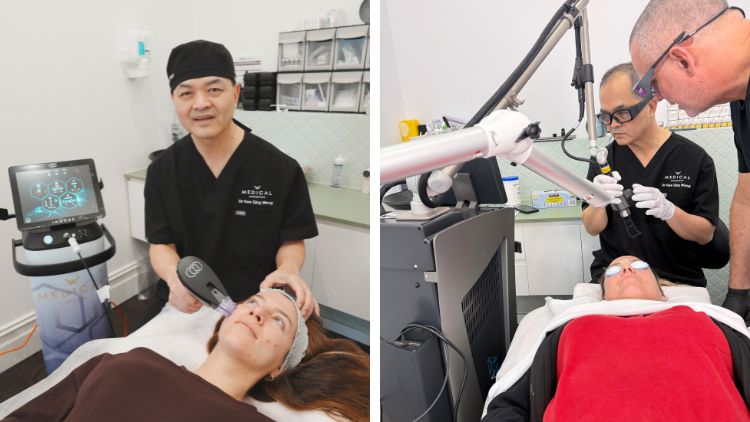
Morpheus8 is a radiofrequency microneedling treatment that delivers controlled energy into the skin, while fractional CO2 laser uses 10,600 nm light to create microscopic treatment zones. Both can support improvement in acne scarring, texture and firmness, but treatment choice depends on scar type, skin characteristics and acceptable recovery time.
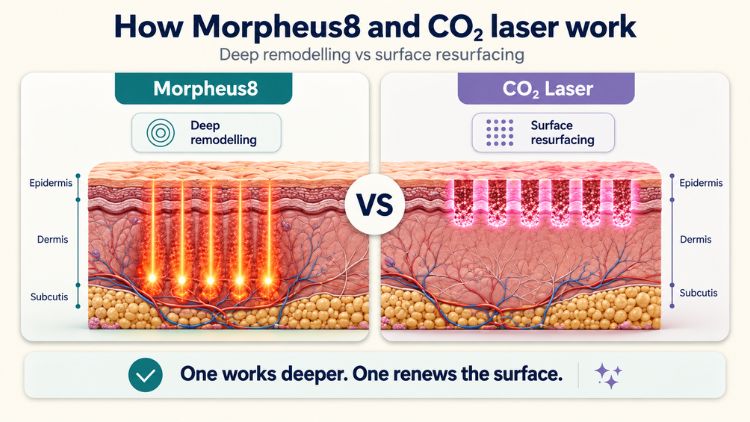
How Morpheus8 and CO2 laser work
One is not automatically better for everyone. We usually start with what you would like to improve and how much recovery you can manage. If surface texture is the main concern, CO2 may be considered. If deeper remodelling or firmness is more relevant, Morpheus8 may fit better. Some scar patterns or more pronounced laxity may need another approach altogether.
Morpheus8 radiofrequency microneedling
Morpheus8 uses a cartridge of microneedles to place controlled radiofrequency energy at chosen depths. Needle depth, energy, pulse pattern, passes and treatment area all influence the tissue response. The skin is punctured rather than ablated by laser light.
This may make Morpheus8 relevant when the goal involves dermal remodelling, selected acne scars, texture or mild-to-moderate firmness concerns. You should still expect a medical procedure rather than a light facial. Pain, redness, swelling, bruising, pinpoint bleeding, crusting and temporary altered sensation can occur. Burns, pigment change, infection and scarring are possible complications.
Fractional CO2 laser resurfacing
Fractional CO2 laser emits 10,600 nm light that is absorbed by water in the skin. It creates microscopic columns of ablation with a controlled thermal effect. Small areas of untreated skin remain between the columns to support repair, although the skin barrier is still disrupted.
CO2 laser treatment can be performed using different depths and treatment densities, from more superficial resurfacing to more intensive fractional treatment. If you are considering CO2, ask which depth and density are being discussed. A superficial setting and a plan for established acne scarring can involve very different recovery.
Morpheus8 vs CO2 laser at a glance
Morpheus8 and fractional CO2 laser use different technologies to target skin concerns. The right option depends on factors such as your main concern, skin characteristics and the amount of recovery you are comfortable with.
|
Concern |
Morpheus8 |
Fractional CO2 Laser |
|---|---|---|
|
Acne scars |
May support scar remodelling |
May improve surface texture |
|
Fine lines & sun damage |
Supports collagen remodelling beneath the skin |
Resurfaces the skin |
|
Skin firmness |
May support dermal remodelling |
Supports collagen remodelling |
|
Downtime preference |
Recovery varies by treatment |
Recovery varies with intensity |
|
Pigmentation risk |
Depends on skin response |
Requires careful assessment |
Which is better for acne scars?
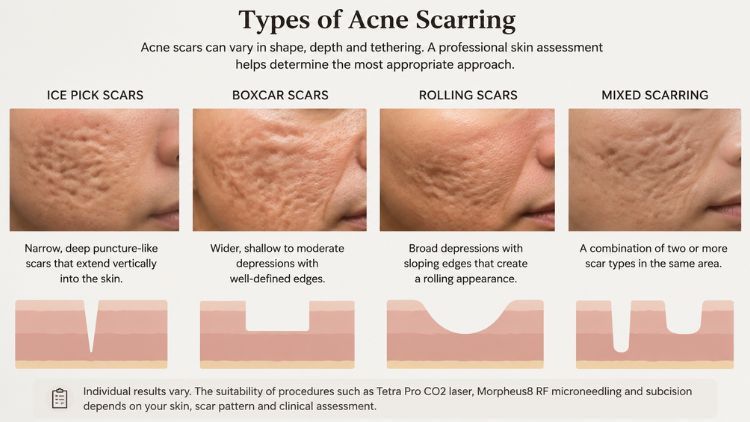
Neither Morpheus8 nor CO2 laser is automatically better for all acne scars. The more suitable option depends on whether the concern is scar depth, tethering, surface texture or pigmentation risk. Different scar patterns respond differently because they involve different layers of the skin.
Both radiofrequency microneedling and fractional CO2 laser are used in the management of selected atrophic acne scars. Suitability and results vary according to scar type, treatment settings and individual skin response, so a personalised assessment remains important.
Dr Wong will look at which part of each scar needs attention. That may lead to Morpheus8, CO2 laser, a focal scar technique, subcision, a staged combination or no treatment at that time. Knowing the scar type also helps you understand why one procedure may improve texture without removing the scar completely.
Which is better for texture, pores and fine lines?
Fractional CO2 directly removes microscopic columns of surface tissue, so it may be considered when rough texture, fine lines or sun-related surface change are prominent. A lighter setting generally means less visible recovery and a more modest degree of resurfacing but a stronger setting can involve more inflammation and a longer healing period.
Morpheus8 can also affect the appearance of texture through controlled injury and thermal remodelling below the surface. Results depend on needle depth, energy and technique. Neither procedure can permanently close pores, stop future ageing or prevent new ultraviolet damage, so ongoing skincare and sun protection still matter.
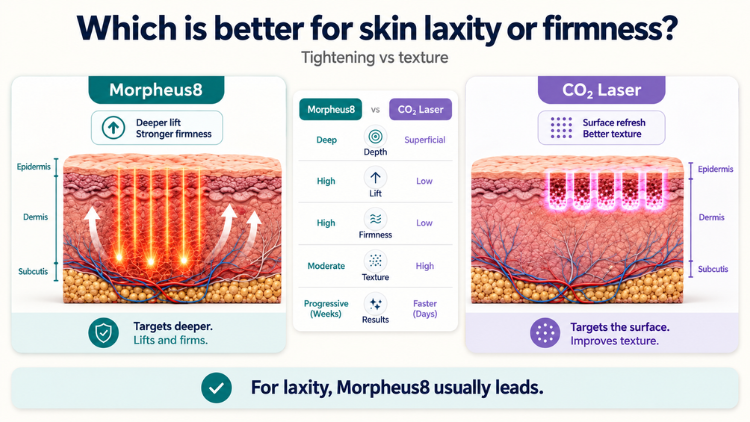
Which is better for skin laxity or firmness?
Morpheus8 may be considered when dermal remodelling or mild firmness concerns are relevant to your skin. Fractional CO2 laser can also support collagen remodelling, but its primary effect includes surface resurfacing. Neither treatment can remove substantial excess skin, so the degree and cause of laxity matter when selecting an approach.
What recovery may mean for your schedule
Morpheus8 recovery may include redness, warmth, swelling, tenderness, pinpoint marks, bruising or small crusts. Fractional CO2 more often leaves a visibly disrupted surface with redness, swelling, bronzing, crusting or peeling. Stronger CO2 settings generally need more protective aftercare while the barrier reforms.
Your calendar matters. If you need to be presentable for work or an event, or you have travel, outdoor work or heavy exercise planned, tell Dr Wong before choosing a date. A more superficial CO2 treatment can have a different recovery profile from deeper fractional resurfacing.
Individual responses vary, and the timing of visible changes and recovery depends on the treatment approach, settings and your skin.
Skin tone and post-inflammatory pigmentation
Post-inflammatory hyperpigmentation can follow either needling or laser injury. Your baseline skin tone, current pigmentation, history of dark marks, recent sun exposure, treatment settings and aftercare can all influence that risk.
Radiofrequency is not a melanin-targeting light, but Morpheus8 still creates inflammation through needles and heat. CO2 disrupts the surface more directly. If you tend to pigment after acne, bites or other skin inflammation, mention it during your assessment so Dr Wong can decide whether either procedure is suitable and how conservative the plan should be.
Can Morpheus8 and CO2 laser be combined?
They can be combined or staged when a plan needs to address different tissue levels. Two treatments do not automatically mean twice the benefit. You may also have more swelling, inflammation, discomfort, cost and recovery.
A combination should have a clear reason that you can understand. Dr Wong should explain what each procedure is intended to address, how the appointments would be spaced, what recovery to expect and whether a simpler plan could achieve a proportionate result.

How Dr Wong approaches the choice
Dr Wong starts with your concern rather than choosing a device first. He considers scar type, skin thickness, degree of laxity, active pigment, recent sun exposure, medical history, previous procedures, healing history and the recovery you can accommodate.
You should leave the consultation understanding which tissue is being targeted and what level of change may be realistic. Dr Wong can also explain appointment spacing, risks and alternative options. It is also reasonable to decide that neither option suits your goals, budget or schedule.
At W Medical Aesthetics, treatment selection begins with understanding your skin rather than choosing a device first. Dr Wong considers your concerns, medical history, skin characteristics and lifestyle factors to create a plan that aligns with your goals and recovery preferences.

Conclusion
Morpheus8 and fractional CO2 laser address skin concerns through different mechanisms and treatment depths. Morpheus8 may be considered when dermal remodelling or firmness is relevant, while fractional CO2 laser may be considered when surface renewal and texture are key concerns. The appropriate option depends on your skin condition, treatment goals and recovery requirements.
At W Medical Aesthetics, Dr Wong assesses your skin rather than selecting a device first. A consultation allows you to understand the expected outcomes, risks, recovery and whether Morpheus8, CO2 laser or another approach is the most appropriate option for your concerns.
Frequently asked questions
Is Morpheus8 safer than CO2 laser?
Neither is universally safer. CO2 disrupts the surface more directly, while Morpheus8 uses needles and radiofrequency heat at depth. Your risk depends on suitability, settings, technique, infection control and aftercare.
Which treatment has less downtime?
Recovery varies between treatments and depends on the treatment approach, settings and your skin. Fractional CO2 involves surface resurfacing and may require visible healing, while Morpheus8 can also cause swelling, bruising or crusting.
Can either treatment remove acne scars completely?
No. Both may improve selected scars, but complete removal is not a realistic expectation. Scar depth, shape and tethering determine whether another technique or a combined plan is needed.
Does Morpheus8 or CO2 laser cost more?
The cost of Morpheus8 and fractional CO2 laser depends on the treatment area, settings, number of appointments and your personalised plan. During consultation, Dr Wong can explain the expected investment, recovery and whether a single treatment or staged approach is more appropriate.
Which option should I choose before an important event?
Allow enough time for redness, swelling, flaking or pigment change to settle and for the result to become assessable. Tell Dr Wong the event date before scheduling anything. If you are unsure whether Morpheus8 or fractional CO2 laser is more suitable for your skin, Dr Wong can assess your concerns, treatment goals and preferred downtime during a consultation at W Medical Aesthetics in Adelaide.