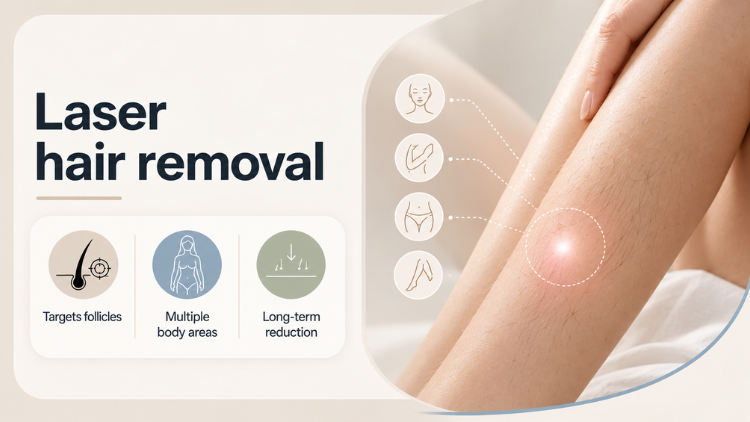
Laser hair removal treatment is a light-based approach designed to reduce unwanted facial and body hair by targeting pigment within active hair follicles. At W Medical Aesthetics in Adelaide, we assessse your hair colour, skin tone, medical history and treatment area to determine whether this approach suits your skin and goals.
The expected level of hair reduction varies between individuals. Factors such as hair thickness, skin tone, recent sun exposure and the area being treated all influence how a treatment plan is approached.
How laser hair removal works
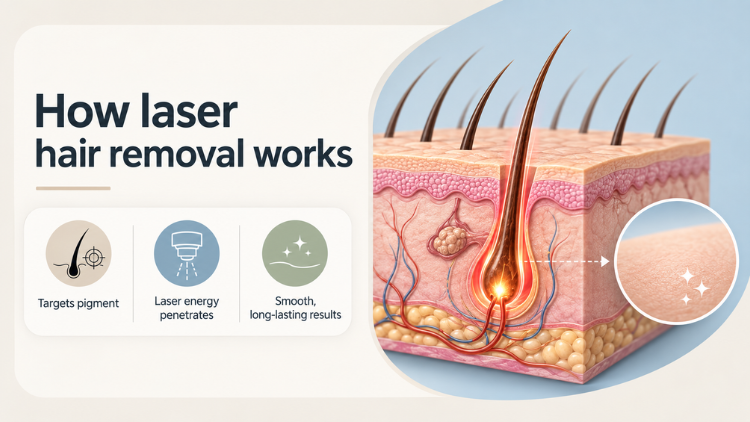
Hair contains melanin, the pigment that gives it colour. A hair-removal laser is selected and adjusted so that this pigment absorbs light and converts it to heat. The aim is to damage structures involved in hair growth without causing unnecessary injury to the surrounding skin.
Only some hairs are actively growing at any one time. Hairs in resting or transitional phases may not respond in the same appointment, which is why treatments are usually spaced across several hair-growth cycles. You may notice less regrowth and finer hairs before the area reaches its longer-term pattern.\
Laser hair removal vs IPL: What is the difference?
Lasers deliver a specific wavelength or narrow range of wavelengths. Intense pulsed light, or IPL, uses a broader spectrum of light with filters. Both can be used for hair reduction, but the device, skin-cooling method and settings need to suit your skin and hair.
Choosing the right technology depends on your skin tone, hair characteristics and treatment goals rather than the device name alone. During an assessment, ask which technology is being proposed, why it suits your skin tone and how the settings will be adjusted if you tan easily or have previously developed dark marks after irritation.
Who is suitable for laser hair removal?
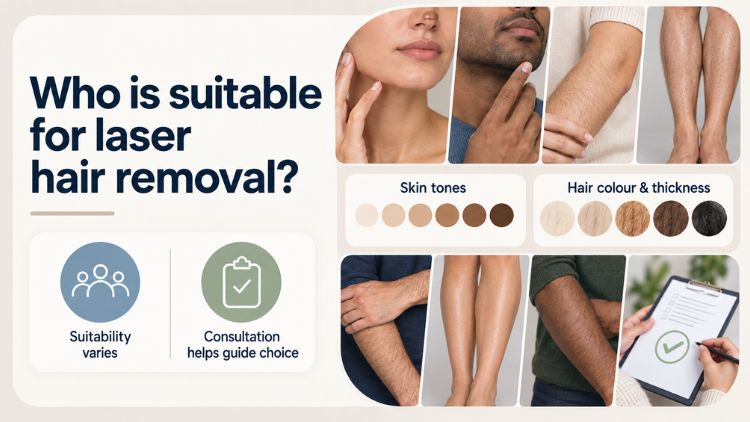
Laser hair removal tends to be most predictable when the hair contains enough pigment for the device to target, although suitability depends on both hair characteristics and skin type. A personalised assessment helps determine whether treatment settings can be adjusted safely for your individual needs.
Dark, coarse hair usually gives the light a clearer pigment target. Blonde, red, white or grey hair contains less of the pigment used by most hair-removal systems, so the response can be limited. Very fine facial hair can also behave differently from coarse body hair.
People with deeper skin tones can still be assessed for laser hair removal, but the margin between hair pigment and skin pigment is narrower. Device choice, wavelength, cooling and conservative settings become especially important. If you have recently tanned, treatment may need to wait because extra pigment in the skin can increase the chance of a burn or colour change.
What changes between the face, legs, back and arms?
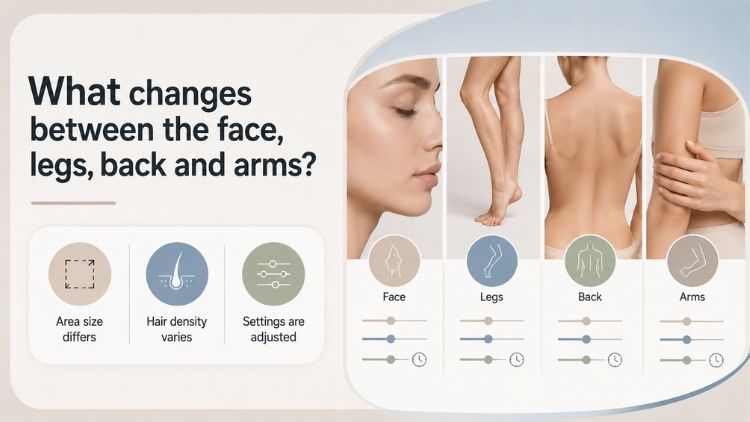
The suitability and approach for laser hair removal can change depending on where treatment is performed. Areas such as facial hair, laser leg hair removal areas, back and arms have different hair characteristics and skin considerations, which is why treatment planning should be personalised for each individual.
Laser hair removal on the face
Facial hair may be influenced by hormones and can be finer or more variable than hair on the legs or back. If you have a sudden increase in facial hair, irregular periods or other new symptoms, mention them. It may be more helpful to investigate a possible medical cause alongside discussing hair reduction.
The face is also visible every day, so redness or swelling may matter more to your work and social plans. Tell us about upcoming events and any tendency to develop cold sores, irritation or post-inflammatory pigmentation.
Laser leg hair removal
The legs are a large treatment area. Appointment time, comfort and total treatment cost can therefore differ from a small facial area. Hair around the knees and ankles may also grow in different directions, so complete coverage depends on careful positioning rather than simply moving quickly over the skin.
Back and arm hair
Back hair is often coarse, which is why laser treatment for back hair requires careful assessment of the treatment area and skin response. Arrange help if you may need someone to check for blistering or unusual redness. For laser hair removal arm hair treatment, fine or patchy hair on the upper arms needs a cautious assessment because a weaker pigment target can make results less predictable.
How many sessions might you need?
There is no reliable single number for every person or body area. Hair growth cycles, density, hormonal influences, device choice and how conservatively your skin must be treated all affect the plan. Maintenance may also be discussed because dormant follicles can become active later.
A useful way to judge progress is to compare consistent photographs and note how often you need to shave between appointments. This is more meaningful than expecting every visible hair to disappear after a set number of visits.
If you are unsure whether laser hair removal suits your skin and hair type, book in with us at W Medical Aesthetics Adelaide for an assessment and personalised discussion.
How to prepare
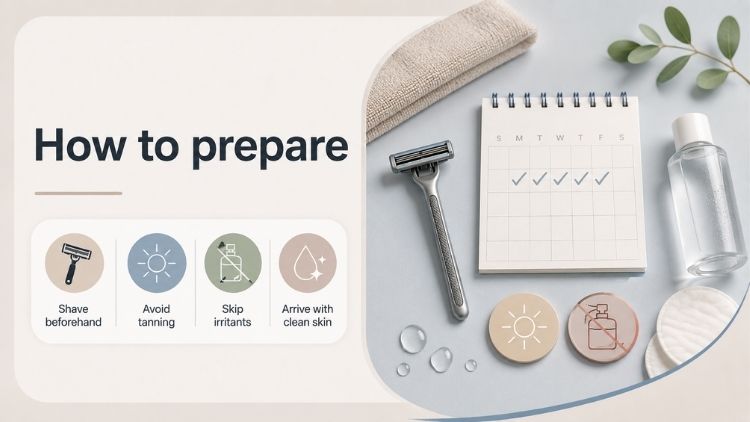
Your clinic’s instructions should come first. In general, preparation may include:
- Avoid waxing, plucking or threading for the period advised, because the follicle needs to contain a hair target.
- Shave 1 day prior to the treatment so that excess hair above the skin does not absorb unnecessary energy.
- Avoid tanning and tell the clinician about recent sun exposure, self-tanner or a planned beach holiday.
- Provide a complete list of medicines, supplements and topical products, including anything that may increase light sensitivity.
- Arrive with clean skin and no deodorant, makeup or fragranced product on the area if advised.
Please do not stop a prescribed medicine on your own. If a medicine affects timing or suitability, we can explain the safest next step or liaise with the clinician who prescribed it.
What treatment and early recovery can feel like
You may feel brief heat, stinging or a snapping sensation as each area is treated. Cooling can make the procedure more comfortable. Afterwards, temporary redness and small raised bumps around the follicles are common. The skin may feel warm or sensitive for a while.
For the first part of recovery, treat the area gently with moisturizer or aloe vera . Avoid scratching, hot baths, saunas, vigorous exercise or direct sun for the period you are given. Use the recommended moisturiser and sun protection. If your skin is still hot or irritated, adding strong acids, retinoids or abrasive scrubs can make it harder to settle.
Risks and when to contact the clinic
Laser and IPL treatments have potential risks, including temporary irritation, pigment changes or burns, particularly when treatment settings are not appropriately matched to the skin. Careful assessment, correct settings and protective measures help reduce these risks.
Contact the clinic promptly if pain is increasing, blistering develops, the redness is spreading, there is discharge, or a marked colour change appears. You do not need to wait for a scheduled review when the skin is becoming more uncomfortable rather than gradually settling.
When it may be better to wait
Treatment may need to be postponed if the area is sunburnt, recently tanned, infected, inflamed or not fully healed. Pregnancy, a new medicine, a history of light-triggered conditions, poor wound healing or previous pigment complications also deserve a careful discussion.
Waiting is a valid decision. If the likely reduction is modest, the timing is inconvenient or the risk does not feel acceptable to you, continuing with shaving or another temporary method may suit you better for now.
What we will consider with you
We will look at the colour and thickness of the hair, your baseline skin tone, recent sun exposure, relevant medical history and the areas that bother you most. We also want to know what you would regard as worthwhile improvement and how much maintenance you are comfortable with.
You should leave the consultation understanding the proposed technology, expected treatment pattern, main risks, likely recovery and alternatives. You can take time to consider that information and are not committed to proceeding.
Why choose W Medical Aesthetics for laser hair removal
Laser hair removal should begin with understanding your skin, hair pattern and treatment goals rather than applying the same approach to everyone. At W Medical Aesthetics, we will assess these factors before discussing whether treatment is appropriate and what level of reduction may be realistic.
A consultation allows you to understand the proposed technology, expected treatment process, recovery considerations and alternatives before deciding whether to proceed.
Frequently asked questions
Is laser hair removal permanent?
It is more accurate to think in terms of long-term hair reduction. Some follicles may produce finer or lighter hair, while other hairs can regrow over time. Hormonal changes can also affect future growth, particularly when considering laser hair removal on face areas.
Can I shave between sessions?
Shaving is often allowed because it leaves the follicle in place, but follows the timing your clinician gives you. Waxing, plucking and threading remove the target hair from the follicle and are usually avoided during a treatment course.
Is laser hair removal safe for all skin types?
Laser hair removal can be suitable for most of the skin types when the correct technology and settings are selected. We consider your skin tone, hair characteristics, medical history and recent sun exposure before recommending a treatment approach.
How much does laser hair removal cost in Adelaide?
The cost of laser hair removal depends on the treatment area, hair density and the number of appointments recommended. During your assessment, we can discuss the factors that influence pricing and the treatment approach that is suitable for your goals.
Can laser help with ingrown hairs?
Reducing coarse hair may reduce one contributor to recurrent ingrown hairs. Active infection, significant inflammation or scarring should still be assessed, because treating irritated skin may need to wait.
Conclusion
Laser hair removal is among the most effective options, though individual responses and results differ. We assesse your skin, hair pattern, medical history and goals before recommending anything, and all procedures carry risks that are discussed with you beforehand.
If unwanted facial or body hair is affecting your comfort or routine, you can request a consultation to discuss whether a clinic-based light or laser option is appropriate for you.