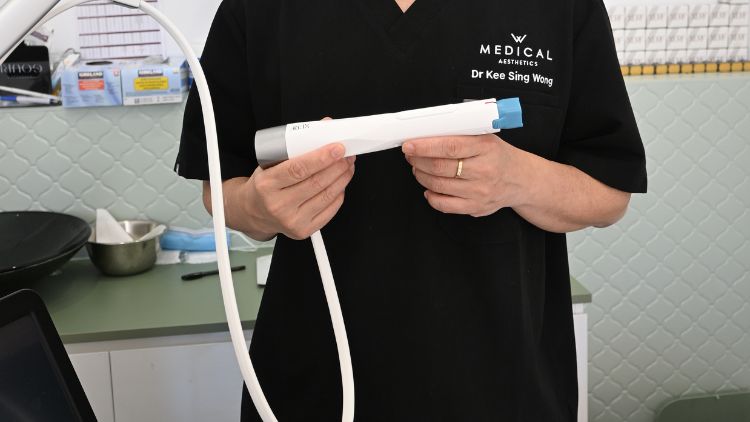
XERF is a non-invasive radiofrequency treatment that heats tissue beneath the skin without needles or an incision. It combines two frequencies with adjustable depth and energy settings. The aim is to create controlled thermal stimulation that may support collagen remodelling and a gradual improvement in skin firmness.
If you are looking at XERF because the lower face or jawline feels less firm, the most useful question is not simply whether the device can “tighten skin”. It is whether your concern comes mainly from mild skin laxity, localised fullness, volume loss or a larger amount of loose skin. Those situations can look similar in the mirror, but they do not respond in the same way. Dr Wong separates them during your assessment so you can understand what XERF may (and may not) change for you.
What is XERF?
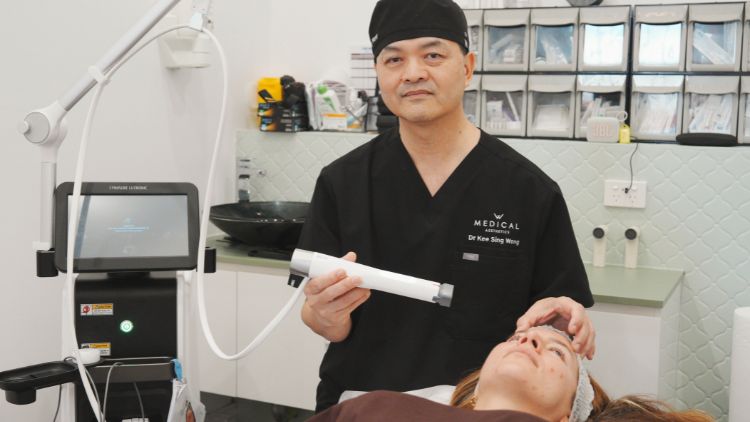
XERF is a monopolar radiofrequency skin tightening and contouring system made by Lutronic. In a monopolar RF system, energy travels from the treatment tip through the planned tissue to a return pad. This creates controlled heating beneath the skin. XERF is a radiofrequency treatment, not a laser. It uses electrical energy to generate controlled heat within tissue rather than using light-based energy.
The handpiece remains on the skin surface, so XERF does not create needle channels or place a cannula beneath the skin. Surface cooling and real-time temperature feedback are built into the platform to help manage heat delivery. You may still feel warmth or brief areas of stronger heat, and comfort varies between people and settings.

How dual-frequency radiofrequency works
XERF uses two frequencies, 6.78 MHz and 2 MHz, to deliver radio frequency for skin tightening at different planned tissue depths. The 2 MHz frequency is designed to distribute heat more deeply and broadly than 6.78 MHz. Different treatment modes allow energy delivery to be adjusted for the area and tissue thickness. This gives us more than one way to plan treatment across areas with different tissue thickness.
When using radiofrequency to tighten skin, “deeper” is not automatically better. The setting needs to match the tissue thickness, treatment area and structure contributing to your concern. More aggressive settings can increase discomfort and the risk of an unwanted heat-related effect. A setting that does not match the target tissue may also fail to address the main concern.
Radiofrequency heating can cause immediate changes in collagen structure and initiate a repair response that continues over time. That is why any visible change may be gradual rather than appearing as a finished result on the day. Swelling can also temporarily change the way an area looks, so it is sensible to let the tissue settle before judging the outcome.
Who may be considered for XERF?
Radio frequency skin tightening with XERF may be considered when mild skin laxity or loss of firmness is the main concern and a non-invasive approach is preferred. Dr Wong first assesses whether skin quality, fat, volume loss or another structure is contributing to the change you see.
- Mild loss of firmness through the lower face, jawline or neck
- Early jowl formation where skin quality is part of the concern
- Mild laxity in selected facial or body areas
- A preference for a surface-based treatment without needles or entry points
- A gradual rather than surgical degree of change
These are considerations, not a checklist that confirms suitability. If a heavier pocket of fat is obscuring the jawline, skin heating alone may not give you the definition you expect. If the face has become hollow, further heating of deeper tissue may also need careful planning. And if there is substantial loose skin, an operation that removes excess skin may be the more direct option.
What XERF cannot be expected to do
XERF does not remove excess skin, replace lost facial volume or reproduce a surgical facelift. It also cannot guarantee a sharper jawline when bone structure, muscle activity or a larger amount of submental fat is the main influence.
Clarifying the main cause helps avoid a treatment that is unlikely to deliver the degree of change you want. Dr Wong may recommend XERF, a different procedure, a staged plan, or no treatment for now.
What does a XERF appointment feel like?
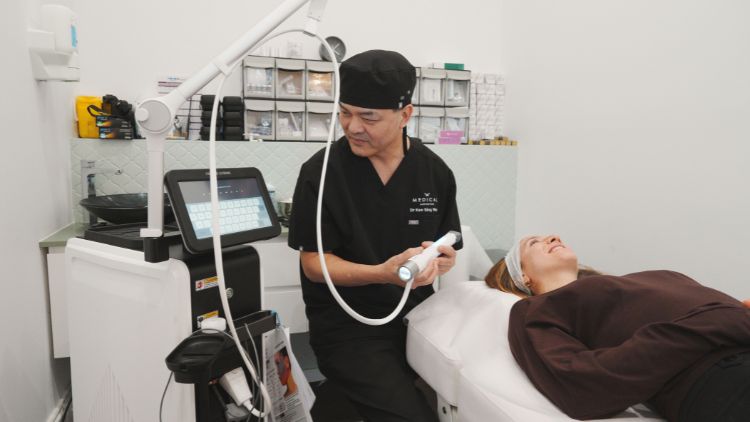
The skin is cleaned and the treatment area is planned before the handpiece is moved across the surface in a structured pattern. Each pulse delivers heat while cooling helps protect the epidermis. You may notice repeated warmth, pressure from the handpiece or occasional hot spots. Tell your practitioner if the heat becomes difficult to tolerate. Energy delivery should respond to how you are feeling rather than being continued simply to reach a preset number.
The time required for a radio frequency facial with XERF depends on the treatment area and individual plan. W Medical Aesthetics will explain the proposed settings, comfort measures and expected appointment length after assessing you.
What is recovery like after XERF?
Recovery after XERF is generally minimal, with some people experiencing temporary redness and warmth. You can usually return to work and your normal daily activities straight after treatment, and makeup can generally be applied immediately afterwards. Individual responses can vary, so Dr Wong will provide personalised aftercare advice based on your treatment.
Follow the aftercare provided for your treatment. Avoid adding heat, vigorous massage or irritating skincare unless the clinic has said it is appropriate. Contact W Medical Aesthetics if pain is increasing, if swelling is marked or asymmetric, or if you notice blistering, a burn, persistent numbness or another reaction that concerns you.
When can XERF results be assessed?
XERF is designed to create a gradual tissue response rather than a finished result on treatment day. Visible changes may continue to evolve as the initial swelling settles and collagen remodelling progresses.
Dr Wong considers your starting anatomy, the area treated and the degree of change being assessed before deciding when a result can be meaningfully reviewed. Early appearance alone should not be used to judge whether another treatment is needed.
How many XERF treatments might be needed?
There is no fixed number of XERF treatments that suits everyone. The appropriate plan depends on the area being treated, tissue characteristics, the degree of laxity and how your skin responds.
Dr Wong reviews whether further treatment is likely to add meaningful benefit rather than assuming that everyone needs the same number of appointments.
XERF compared with other tightening options
XERF differs from other skin-tightening treatments mainly in the type of energy used, how that energy is delivered and whether the procedure enters the skin. XERF and Thermage use monopolar radiofrequency from the skin surface. HIFU and Ultherapy use focused ultrasound, while FaceTite delivers radiofrequency beneath the skin through small entry points.
XERF vs HIFU
Both are surface-based treatments, but they use different energy. XERF uses radiofrequency to create broader areas of controlled heating. HIFU uses focused ultrasound to create small thermal points at selected depths. Neither is automatically stronger or better; the device, settings, tissue thickness, pain tolerance and treatment goal all matter.
XERF vs Thermage
XERF and Thermage are both non-invasive monopolar radiofrequency treatments that deliver energy from the skin surface. The main difference lies in their device design and energy-delivery systems. XERF combines two radiofrequency frequencies and offers selectable depth settings, while Thermage uses its own monopolar RF platform with integrated cooling and treatment-tip technology. Suitability depends on the treatment area, skin laxity, practitioner assessment and the response expected from each platform.
XERF vs Ultherapy
Ultherapy is a branded microfocused ultrasound treatment with real-time imaging. This imaging allows the practitioner to visualise tissue and deliver energy at selected depths. XERF does not use ultrasound imaging; it delivers monopolar radiofrequency across broader treatment zones. Ultherapy may be considered when precise depth targeting is important, while XERF may suit someone seeking surface-based RF tightening across multiple tissue levels.
XERF vs FaceTite
FaceTite places a radiofrequency applicator beneath the skin through small entry points. It is minimally invasive and may address localised fat and tissue contraction more directly, but it involves anaesthesia, visible recovery and more substantial procedural risks. XERF stays on the surface and generally suits a person looking for a less invasive level of intervention.
|
Treatment |
Energy delivery |
Skin entry |
Recovery level |
May be considered when |
|---|---|---|---|---|
|
XERF |
Surface monopolar RF |
No |
Lower |
Non-invasive tightening across adjustable tissue depths |
|
HIFU |
Focused ultrasound |
No |
Lower |
Concentrated thermal points at selected depths |
|
Thermage |
Surface monopolar RF |
No |
Lower |
Broad RF heating for firmness and skin tightening |
|
Ultherapy |
Microfocused ultrasound with real-time imaging |
No |
Lower |
Visualised treatment at selected tissue depths |
|
FaceTite |
RF delivered beneath the skin |
Yes |
Higher |
More invasive tightening or contouring is appropriate |
If you are deciding between these options, begin with the degree of change you want and how much recovery and procedural risk you can reasonably accept. The device name alone does not determine the result. Tissue characteristics, treatment settings, practitioner experience and suitability assessment also influence the treatment plan.
Is XERF safe? Risks and reasons to delay treatment
Expected temporary effects may include redness, warmth, swelling, tenderness and sensitivity. Less common risks can include burns, blistering, prolonged pain, altered sensation, contour change, pigment change or an unsatisfactory result.
Treatment may need to be delayed if the area is infected or inflamed, or if healing is impaired. Implanted electrical devices, metal in the treatment area, pregnancy, recent procedures and other medical factors may also affect suitability. This is not a complete exclusion list. Please tell Dr Wong about your health conditions, medicines, implants and previous facial procedures so advice can be specific to you.
How Dr Wong assesses whether XERF suits your goals
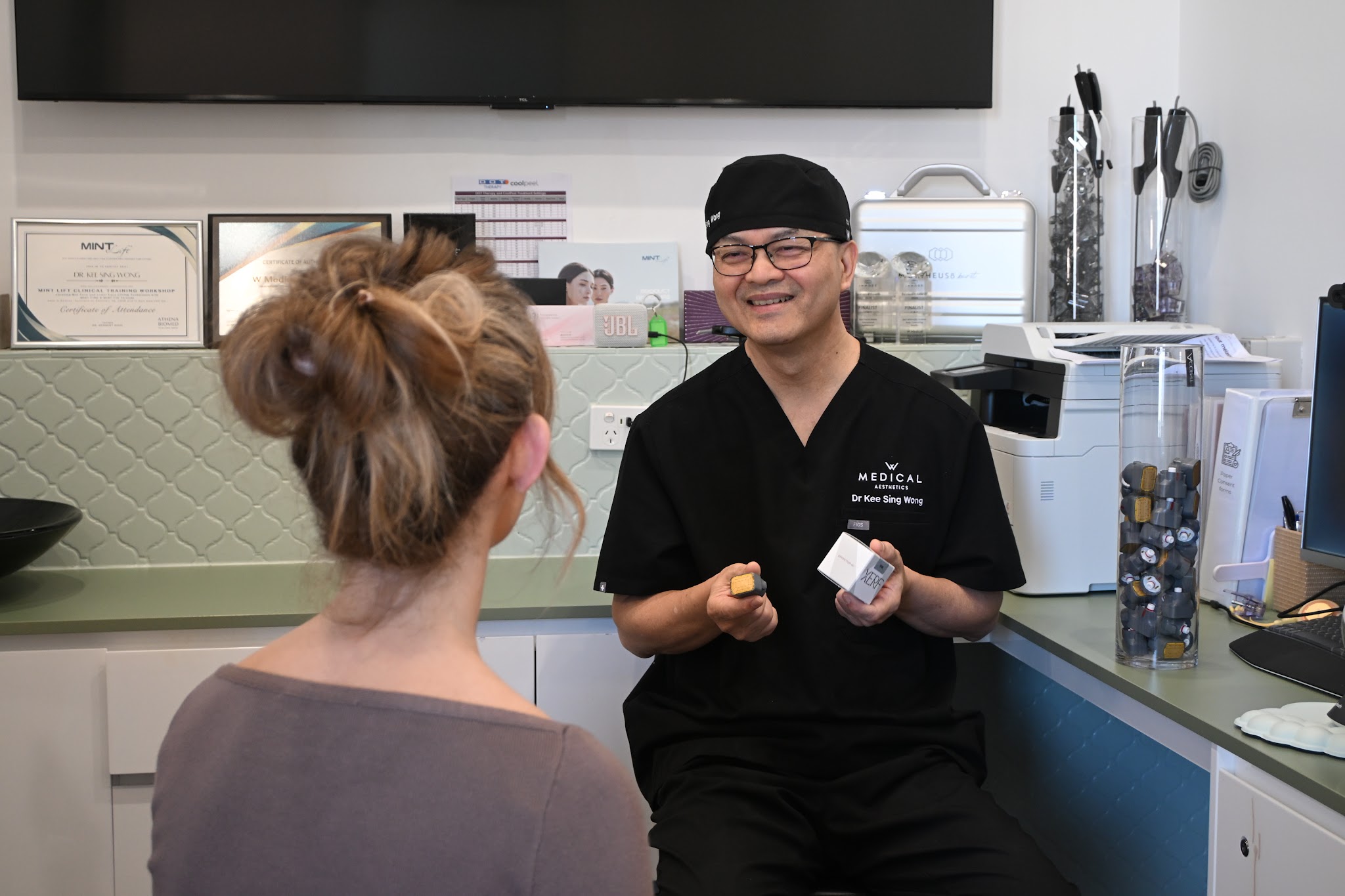
Dr Wong looks at the area while your face is relaxed and moving, then considers skin thickness, laxity, localised fat, facial volume and previous procedures. He will also ask how much change you want, how soon you want it and what recovery you can accommodate.
Useful questions to bring to your consultation include:
- Which structure is creating the change I can see?
- What degree of improvement is realistic with a surface-based treatment?
- What might I feel or look like in the days afterwards?
- What are the alternatives, including waiting or choosing no procedure?
- How will we decide whether another appointment is worthwhile?
Frequently asked questions about XERF
Is XERF a laser treatment?
No. XERF is a monopolar radiofrequency treatment rather than a laser. It creates controlled heat within planned tissue using radiofrequency energy, while laser treatments use light energy. The two technologies therefore work differently and may be selected for different concerns.
Does XERF hurt?
XERF can feel warm, and some pulses or areas may feel hotter than others. Comfort depends on the treatment area, tissue thickness and energy settings. Dr Wong and the clinical team should adjust treatment according to your response rather than relying on a fixed intensity for every person.
When can you notice changes after XERF?
Any visible change after XERF may develop gradually as treated tissue settles and collagen remodelling progresses. Swelling can also temporarily affect appearance soon after treatment, so Dr Wong considers the timing of review before deciding whether the outcome can be meaningfully assessed.
How many XERF treatments do you need?
There is no single treatment number that suits everyone. The plan depends on your anatomy, treatment area, degree of laxity and response. Dr Wong reviews whether another appointment is likely to add meaningful benefit rather than assuming that every patient should follow the same treatment schedule.
How much does XERF cost in Adelaide?
XERF pricing depends on the treatment area and the plan considered appropriate after assessment. W Medical Aesthetics can confirm current pricing before treatment, so you can understand the expected cost before deciding whether to proceed.
A considered next step
XERF is a newer dual-frequency approach to radio frequency skin tightening, not a shortcut around assessment. It may be useful when mild laxity is the main concern and a non-invasive approach is preferred. Its limitations matter just as much as the technology itself.
At W Medical Aesthetics in Adelaide, Dr KS Wong can assess what is contributing to the change you see. He can then explain whether XERF, another option or no treatment at this stage is the more appropriate approach. An appointment gives you information; it does not commit you to proceeding.
Practitioner and information scope
Dr Kee Sing Wong (Ahpra MED0000996242) is a registered medical practitioner with general registration and specialist registration in general practice. Registration status: Registered, as stated in the clinic’s professional profile. His FACCSM (Med) fellowship is not specialist registration in plastic surgery.
This article provides general information, not individual medical advice or a recommendation to undergo treatment. Suitability, outcomes, recovery and maintenance vary. Discuss procedure-specific risks, alternatives and the option not to proceed with the treating practitioner.