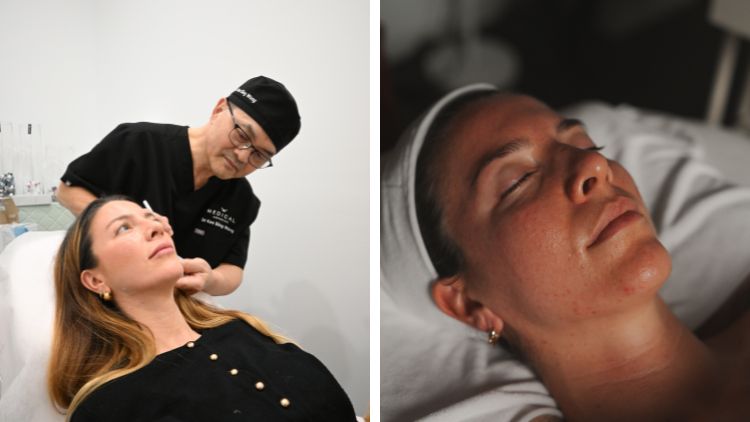
FaceTite and HIFU can both be considered for facial or neck laxity, but they deliver energy differently. FaceTite uses radiofrequency beneath the skin through small entry points and is minimally invasive. HIFU delivers focused ultrasound from the skin surface without incisions. FaceTite may also be combined with treatment of selected localised fat.
If you are deciding between them, begin with the change you want and the recovery you can accept, rather than which treatment sounds more advanced. Dr Wong will look at skin laxity, tissue thickness, localised fat, facial volume and the possibility that neither option is the right match.
The central difference between FaceTite and HIFU
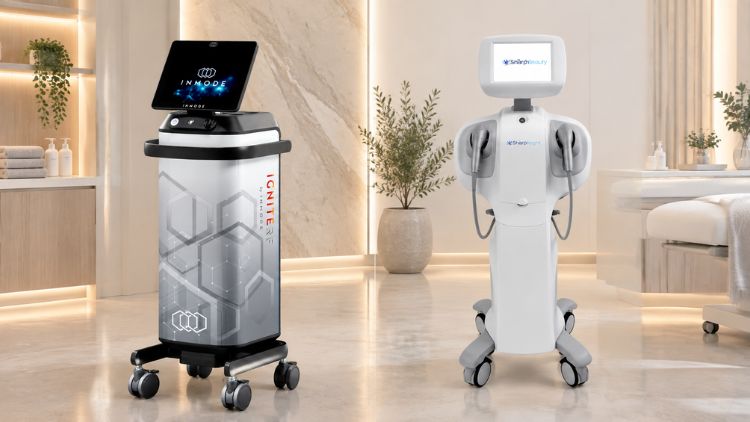
The main difference between HIFU and RF is where and how energy is delivered. With FaceTite, an internal electrode travels beneath the skin while an external electrode follows above it. Radiofrequency heats the tissue held between the two. With HIFU, ultrasound energy passes through the surface and is focused into small thermal points at chosen depths.
This changes the whole treatment experience. FaceTite needs access points, anaesthesia, procedural aftercare and time for swelling and bruising to settle. HIFU does not break the skin, although it can still cause pain, tenderness, swelling or altered sensation. A non-invasive treatment is not risk-free, and a minimally invasive treatment is not minor simply because its incisions are small.
|
Factor |
FaceTite |
HIFU |
|---|---|---|
|
Energy |
Radiofrequency |
Focused ultrasound |
|
Delivery |
Beneath the skin |
From skin surface |
|
Skin entry |
Small access points |
None |
|
Invasiveness |
Minimally invasive |
Non-invasive |
|
Numbing |
Usually required |
No incision |
|
Localised fat |
May combine with aspiration |
Does not mechanically remove fat |
|
Recovery |
More visible |
Generally lower |
|
May suit |
More direct intervention |
Milder laxity, less invasive preference |
FaceTite vs HIFU in practical terms
FaceTite and HIFU differ most clearly in invasiveness, the tissue they can address, recovery and procedural risk. FaceTite works beneath the skin and may be combined with selected localised fat treatment. HIFU works from the surface and may be considered when a non-invasive approach and more modest degree of change are appropriate.
Degree and type of laxity
HIFU is generally considered for mild to moderate laxity when a gradual, non-surgical degree of change is acceptable. Research on microfocused ultrasound shows the average improvement is usually modest and varies with treatment settings and patient selection.
FaceTite may be considered when more direct subdermal heating is appropriate and a person accepts a more involved procedure. Neither option removes a large amount of excess skin. If laxity is advanced, a surgical opinion may help you understand what can realistically change, even if you prefer not to have surgery.
Localised fat and jawline definition
FaceTite may be combined with aspiration of a selected pocket of fat beneath the chin. HIFU does not mechanically remove fat. Some HIFU devices and protocols can affect fat at particular depths. This may be undesirable in a lean or hollow face and should not be assumed to create predictable contouring.
A blurred jawline is not always a fat problem. Loose skin, a small or retruded chin, neck muscle position and facial volume can all influence the outline. Treating the wrong structure can leave you with little change or alter fullness that you wanted to keep.
Anaesthesia and sensation
FaceTite is usually performed with local anaesthesia and may involve other comfort or sedation measures depending on the agreed plan and clinical setting. HIFU is performed from the surface without an incision, but pulses can feel sharp, hot, aching or deeply tingling. Systematic reviews report that discomfort can occur, and individual tolerance varies.
Recovery
After FaceTite, swelling, bruising, tenderness, firmness and temporary numbness can affect work, exercise and social plans. Entry points need care, and compression may be recommended. Some swelling settles quickly while residual firmness or unevenness can take longer.
After HIFU, redness, tenderness, swelling or tingling may be less visible, but they can still occur. Rare reports include burns, temporary altered sensation and other nerve-related symptoms. If you have an important event or travel planned, discuss the timing before either treatment so there is room for an individual recovery response.
Risks
FaceTite risks include bleeding, infection, burns, delayed healing, seroma, nerve injury, contour irregularity, asymmetry, scarring, unwanted fat loss and anaesthetic complications. The internal path of the applicator makes anatomy and operator technique especially important.
HIFU risks include pain, redness, swelling, bruising, altered sensation, welts or burns, and an unsatisfactory or asymmetric result. Serious complications are uncommon in published studies, but study follow-up and reporting vary. The exact device, cartridge depth and treatment plan matter.
When results may become clear
Both treatments can involve gradual tissue remodelling. Early swelling can make an area look different before the final response can be judged. Published HIFU research commonly assesses change at around three to six months. FaceTite recovery and remodelling also unfold over months, particularly when tissue contraction and fat treatment are combined.
The durability of either result varies, so a fixed timeline cannot be promised. Ageing continues, and weight change, sun exposure, skin quality and the original anatomy affect how the area looks over time.

Which option may suit different situations?
HIFU may suit someone with milder laxity who prioritises a non-invasive approach. FaceTite may be discussed when more direct subdermal treatment or selected localised fat is relevant. Neither choice should be based on laxity alone, because facial volume, skin thickness, recovery capacity and treatment goals also influence suitability.
Mild laxity and want to avoid entry points
HIFU may be worth discussing if your main concern is mild laxity and you are comfortable with a modest, gradual result. External radiofrequency, including XERF, may also be considered. The choice can depend on tissue thickness, the area, prior procedures and how you respond to heat or discomfort.
Moderate laxity with a small pocket under the chin
FaceTite may offer a more direct way to treat selected subdermal tissue and localised fat, provided you understand the recovery and risks. Dr Wong will also consider whether the skin is likely to contract enough after any fat is reduced.
Thin or hollow lower face
Caution is important with any energy treatment that may affect deeper tissue or fat. A plan that reduces volume can make hollowness more noticeable. Your assessment should identify where support has been lost before discussing tightening.
Substantial loose skin
Neither HIFU nor FaceTite can remove excess skin. If the degree of change you want requires skin removal or repositioning of deeper tissue, surgery may be the more effective category. Choosing a smaller procedure can still lead to disappointment if it cannot reach the goal.
Is HIFU better than RF?
A HIFU vs RF comparison is not as simple as deciding which technology is better, because RF is a broad category. External monopolar RF, RF microneedling and subdermal RF with FaceTite deliver energy in different ways and carry different recovery and risk profiles. When comparing HIFU and radio frequency treatments, the useful question is which exact procedure is being proposed for your concern.
For mild laxity, HIFU vs RF skin tightening evidence does not establish one universal winner because devices, protocols and patient selection vary. A 2023 systematic review of microfocused ultrasound found mild improvement in patient-reported outcomes and limited longer-term follow-up. A 2022 RF review found measurable improvement across monopolar and bipolar devices but also substantial variation between studies.
This means the device name alone should not determine the treatment choice. Ask what tissue will be targeted, what degree of change is realistic, what the material risks are and how the practitioner will review your response.
Questions to ask before choosing
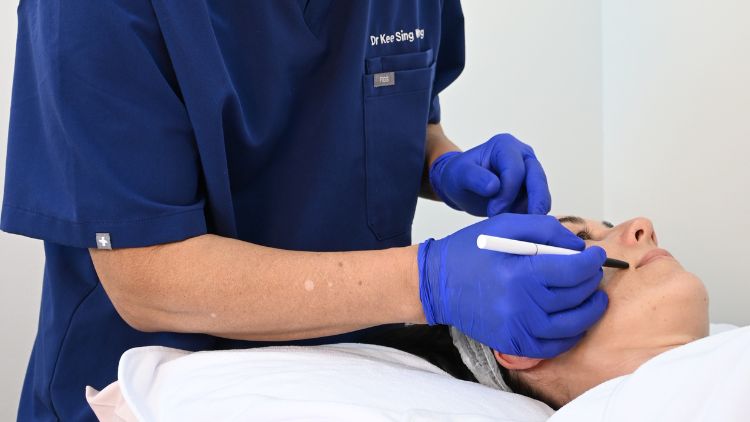
Before choosing FaceTite or HIFU, the most useful questions focus on anatomy, realistic change, recovery and risk rather than which device is stronger. A consultation should leave you understanding what tissue is being targeted, why that approach is being proposed and what reasonable alternatives are available.
- Which part of my anatomy is creating the concern I can see?
- Is the proposed treatment expected to change skin, fat, both, or neither directly?
- What device and settings are being proposed, and why?
- What will recovery realistically mean for my work, exercise and caring responsibilities?
- Which complications require an urgent call or review?
- Would surgery, a different non-invasive treatment, waiting or no procedure better match my goal?
Frequently asked questions about FaceTite vs HIFU
Is FaceTite better than HIFU?
The question “is HIFU better than RF?” does not have one universal answer, because radiofrequency includes several different treatment approaches. FaceTite may be considered when a more direct, minimally invasive approach is appropriate, while HIFU may suit milder laxity when avoiding entry points is a priority. The more useful comparison is which procedure better matches the anatomy, recovery preference and treatment goal.
Which has more downtime, FaceTite or HIFU?
FaceTite generally involves more visible recovery because an applicator passes beneath the skin through small access points. Swelling, bruising and tenderness can affect daily plans. HIFU does not break the skin, although temporary redness, tenderness, swelling or altered sensation can still occur.
Can FaceTite or HIFU treat a double chin?
The answer depends on what is creating the fullness. FaceTite may be combined with aspiration of selected localised fat, while HIFU does not mechanically remove fat. Loose skin, chin projection, neck muscle position and facial volume can also influence the under-chin contour.
Which is better for mild skin laxity?
HIFU may be discussed when laxity is mild and a non-invasive approach is preferred. FaceTite involves more intervention and recovery, so choosing it solely because it seems stronger may not be proportionate to a mild concern. Tissue thickness, facial volume and treatment goals still influence suitability.
How much do FaceTite and HIFU cost in Adelaide?
Pricing depends on the treatment area, procedure and individual plan. W Medical Aesthetics can confirm current pricing after clarifying which option is being considered, so cost can be compared alongside recovery, risks and the expected degree of change.
How Dr Wong helps you decide
At W Medical Aesthetics, Dr Wong assesses the face and neck rather than asking you to choose from a treatment menu. He considers skin quality, laxity, fat distribution, volume, muscle movement, previous procedures, medical history and how much recovery you can manage.
You may leave with a FaceTite plan, a non-invasive option, a recommendation to seek a surgical opinion, or a decision to wait. That is still a useful consultation. The purpose is to help you understand which approach is proportionate to your concern and appropriate for your recovery preferences.
FaceTite vs HIFU: Which may be more suitable?
FaceTite may suit selected people who want a more direct, minimally invasive approach and can accept anaesthesia, recovery and higher procedural risk. HIFU may suit selected people with milder laxity who prefer a surface-based treatment and accept that the change may be modest. Neither is automatically the better treatment, and neither can promise a surgical result.
If you would like a careful comparison based on your own face rather than a device name, Dr KS Wong can assess you at W Medical Aesthetics in Adelaide. A consultation helps you understand the alternatives, including doing nothing, without committing you to treatment.
Practitioner and information scope
Dr Kee Sing Wong (Ahpra MED0000996242) is a registered medical practitioner with general registration and specialist registration in general practice. Registration status: Registered, as stated in the clinic’s professional profile. His FACCSM (Med) fellowship is not specialist registration in plastic surgery.
This article provides general information, not individual medical advice or a recommendation to undergo treatment. Suitability, outcomes, recovery and maintenance vary. Discuss procedure-specific risks, alternatives and the option not to proceed with the treating practitioner.