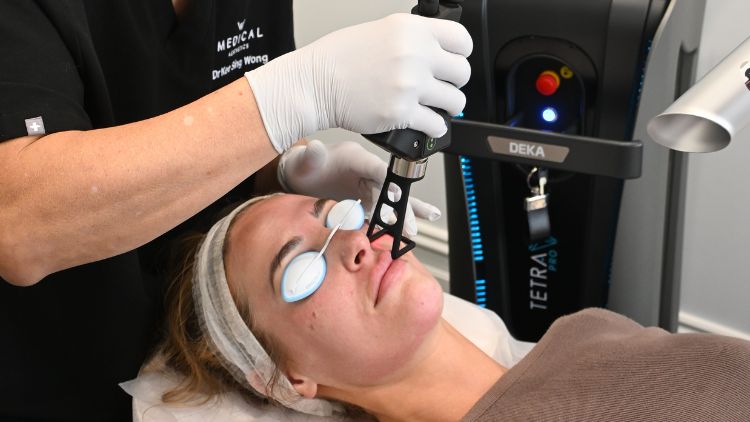
CO2 and Erbium:YAG are ablative lasers that remove controlled amounts of skin. Resurfacing can improve selected lines, indented acne scars and uneven texture. CO2 generally creates more surrounding heat than ablative Erbium:YAG. The choice depends on your skin, treatment settings and recovery needs. At W Medical Aesthetics in Adelaide, assessment with Dr Wong comes before a treatment recommendation.
CO2 and Erbium laser resurfacing differences
CO2 and ablative Erbium:YAG lasers both target water in the skin. Their energy removes tissue, a process called ablation. A key difference between Erbium and CO2 laser resurfacing is how much heat remains in the surrounding skin after tissue removal. This influences treatment planning, healing and risks.
CO2 lasers operate at 10,600 nanometres. Ablative Erbium:YAG lasers use 2,940 nanometres, a wavelength strongly absorbed by water. Erbium can remove thin layers with relatively little residual heat. Some Erbium systems allow the practitioner to adjust both tissue removal and heating. Erbium resurfacing therefore does not always mean a light procedure or a short recovery.
| Comparison | CO2 laser | Ablative Erbium:YAG laser |
|---|---|---|
| Wavelength | 10,600 nm | 2,940 nm |
| Main tissue target | Water | Water |
| Surrounding heat | Generally greater | Generally less, depending on settings |
| Delivery | Fractional or full-field | Fractional or full-field |
| Potential uses | Selected lines, scars and texture | Selected lines, scars and texture |
| Recovery | Depends on depth, density and area | Depends on depth, density and area |
In this comparison, Erbium means ablative Erbium:YAG. Non-ablative erbium-glass lasers are a different category. They heat tissue without removing the surface in the same way, so their recovery and results should be compared separately.
Fractional describes the treatment pattern
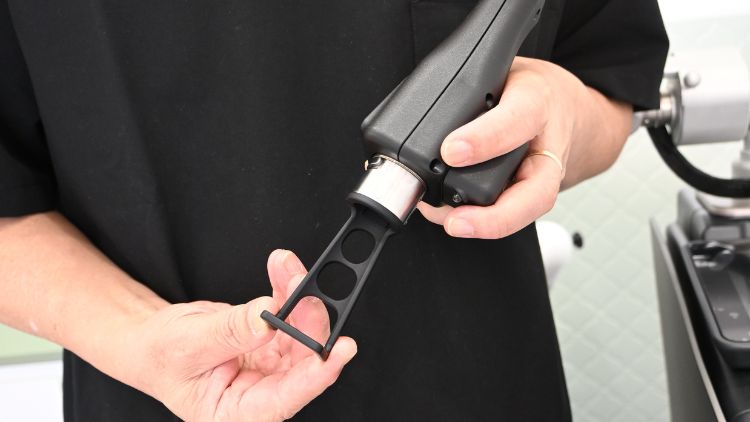
Fractional resurfacing treats small columns of skin while leaving areas between them untreated. Full-field resurfacing treats the surface more continuously. Both CO2 and Erbium laser systems can deliver fractional resurfacing. When comparing fractional CO2 vs Erbium:YAG, the proposed depth and proportion of skin treated matter alongside the laser type.
For example, two CO2 appointments can have different recovery demands if their depth or treatment density differs. Treating a small area conservatively can involve different wound care and recovery needs from more extensive resurfacing.
Ask about the proposed area, depth and coverage when discussing an option. These details give you a clearer basis for planning recovery than the laser name alone.
What resurfacing can change in lines and scars
Erbium and CO2 laser resurfacing can improve the appearance of selected lines and indented acne scars. They do not remove every scar or reproduce the effect of a surgical lift. Fine surface lines, deeper folds and indented scars need different assessments. Resurfacing works on the skin and does not address every cause of a visible line or fold.
Lines present at rest are more relevant to resurfacing than lines caused mainly by facial movement. CO2 laser for wrinkles may soften selected lines, but it does not stop expression or ongoing skin changes.
A 2013 trial involving 24 people with acne scars treated one side of each participant’s face with fractional CO2 and the other with fractional Erbium:YAG. The researchers found comparable improvement, with greater treatment discomfort on the CO2-treated side. This small study used specific settings. It cannot predict an individual result or establish that every device performs equally.
Scar shape also changes the plan. A scar held down by tissue beneath the surface may need a different approach from a shallow surface depression. Before considering CO2 laser for scars, Dr Wong assesses their depth and whether underlying tissue is pulling them down.
Skin tone and medical history guide suitability
Suitability involves more than choosing the laser with the shorter expected recovery. Your practitioner needs to assess your skin, previous pigment changes, medical history and the area being treated. A recent tan or sunburn can make laser treatment inappropriate at that time. Sun protection matters before and after treatment.
Tell your practitioner about previous dark marks after inflammation, cold sores, unusual scarring and any delayed healing. Bring a list of medicines, supplements and previous procedures. These details help identify risks that a photograph or treatment name cannot reveal.
Do not stop prescribed medicines without advice from the clinician responsible for them.
Your practitioner considers both your skin tone and your history of pigment changes. Fractional delivery alone does not establish whether resurfacing suits your skin. Your consultation should clarify whether resurfacing, another approach or waiting is appropriate.
Recovery includes wound healing and lingering redness
Erbium resurfacing often has a shorter initial recovery than CO2, but there is no single timetable for either. The American Society of Plastic Surgeons gives broad recovery guides of one week for Erbium and up to two weeks for CO2. Your practitioner should explain the recovery expected from the specific treatment proposed.
The treated surface can heal before its colour settles. Redness may remain for weeks or longer, depending on the procedure and individual response. You may feel ready to work from home before you feel comfortable returning to face-to-face work or attending an event. Discuss both with your practitioner before setting a date.
If you have travel, outdoor work or an important event planned, bring the dates to your consultation. Ask how the proposed treatment would affect wound care, sun avoidance and follow-up. Leave room for slower healing rather than assuming the shortest estimate will apply to you.
Risks and aftercare to understand before proceeding
Ablative resurfacing creates a controlled injury and requires aftercare. Expected effects can include heat, discomfort, swelling, crusting and peeling. Complications include infection, pigment changes, prolonged redness and scarring. A history of cold sores also needs discussion because resurfacing can trigger a recurrence.
Pain relief depends on the treatment area and intensity. Numbing measures can reduce discomfort, but they do not guarantee a painless appointment. Ask what you might feel during treatment and what support is available afterwards.
Your written care plan should explain:
- How to cleanse and protect the treated area.
- Which skincare products to pause and when to restart them.
- When makeup, exercise and swimming can resume.
- How to protect healing skin from sun exposure.
- Who to contact if recovery is not progressing as expected.
Avoid picking crusts or peeling skin. Follow the treating practitioner’s instructions rather than a routine intended for a different laser procedure. Ask before leaving which symptoms require prompt review and how to reach the clinic outside normal hours.
Results develop over time and may need review
Changes in scar texture can continue after the surface has healed. In the 2013 comparison trial, improvement progressed between the one-month and six-month follow-up assessments. This supports allowing time to assess a response, rather than judging the result immediately after peeling stops.
The number of appointments depends on the concern, treatment intensity and how the skin responds. Some people need further treatment, while others decide that the change achieved is enough. Laser treatment cannot erase a scar, and visible improvement can take months.
There is no universal maintenance schedule for CO2 or Erbium resurfacing. Before considering another appointment, review what changed, any side effects and whether further treatment would offer enough benefit to justify its recovery and risk. Ongoing sun exposure and normal skin changes also affect the longer-term appearance.
What to discuss with Dr Wong in Adelaide
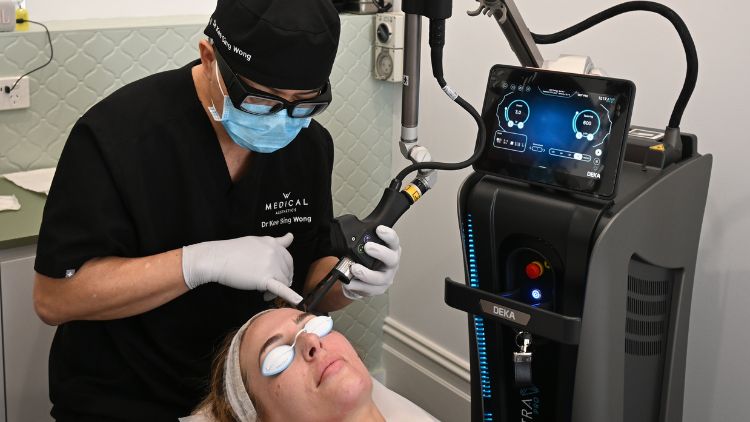
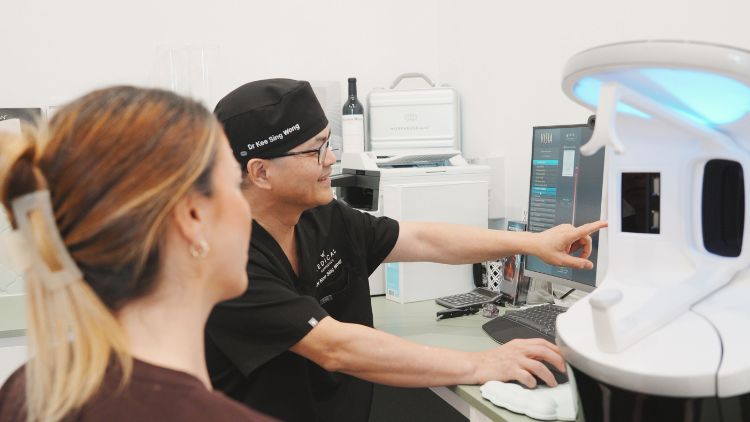
At W Medical Aesthetics, Dr Wong assesses your skin and medical history before discussing treatment options. The clinic offers Tetra Pro CO2 Laser as a fractional resurfacing option. Whether it suits your concern depends on the assessment, expected recovery and risks.
You do not need to choose a laser before your appointment. Dr Wong reviews your main concern, skin history and previous procedures, then discusses suitable options and their limits. The conversation should also cover expected recovery, costs and follow-up before you decide whether to proceed. Sometimes another approach or no procedure is the more appropriate choice.
Useful questions include:
- What is causing the concern I can see?
- What change is realistic, and what is unlikely to change?
- Why does the proposed approach suit my skin?
- Who will perform the procedure and manage follow-up?
- What recovery time should I allow for work and events?
- What would the full cost include?
The cost depends on the area treated, treatment intensity and care required. Ask for a written quote covering consultation, pain management, aftercare and review. Check which costs are additional and how any further treatment would be charged before deciding whether to proceed.
Frequently asked questions
Is Erbium laser resurfacing always a lighter procedure than CO2?
No. Ablative Erbium:YAG generally leaves less surrounding heat than CO2, but treatment depth, settings and coverage also affect recovery. Extensive Erbium resurfacing can still require substantial wound care. Ask about the specific procedure proposed rather than assuming the laser name indicates a lighter treatment.
Does fractional resurfacing mean there is no downtime?
No. Fractional resurfacing leaves untreated skin between treatment columns, but the treated areas still need to heal. Redness, swelling, crusting and peeling can affect daily activities. Recovery depends on the depth, density and area treated, as well as your individual healing response.
Can resurfacing remove every type of acne scar?
No. Acne scars differ in shape, depth and whether tissue beneath the surface holds them down. Resurfacing can improve selected scars, but it cannot erase them or address every scar type on its own. An assessment helps establish which features could respond and whether another approach is needed.
When can I restart skincare and wear makeup?
Restart skincare and makeup according to your treating practitioner’s instructions, once healing allows. The timing depends on the procedure and how your skin recovers. Your written aftercare plan should explain which products to pause, when to reintroduce them and when to contact the clinic if irritation develops.
Do I need to choose between the lasers before booking?
No. At W Medical Aesthetics, the consultation starts with your concern, skin history and recovery needs. The clinic offers Tetra Pro CO2 Laser, and Dr Wong assesses whether it is appropriate. You do not need to select a device or commit to a procedure before your assessment.
Choosing between CO2 and Erbium laser resurfacing
CO2 & Erbium laser resurfacing can address selected lines, scars and uneven texture, but neither suits every concern. The choice depends on your skin, the proposed treatment depth and the recovery you can manage. Understanding the likely benefits alongside the risks helps you decide whether resurfacing is an appropriate step.
At W Medical Aesthetics in Adelaide, Dr Wong assesses your concerns before discussing suitable options. Book a consultation to talk through realistic changes, recovery and costs, or contact the clinic with a question before booking.
This page provides general information and does not replace an in-person assessment. Individual responses and results differ. Dr Wong assesses your skin, medical history and goals before recommending an option. All procedures carry risks that need discussion beforehand.