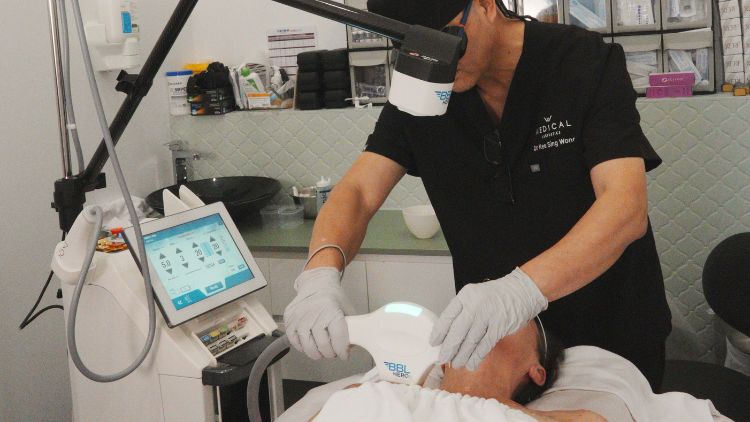
When comparing BBL vs IPL, the first point to understand is that they are closely related light-based treatments, not separate technology categories. BBL is Sciton’s proprietary form of intense pulsed light, while IPL covers a broader range of devices. The option that suits your skin depends on the concern being treated, your skin characteristics and how the device is selected and adjusted.
BBL vs IPL at a glance: Are they the same?
BBL and IPL use the same broad technology category, but the names are not interchangeable. IPL describes intense pulsed light treatments generally. BBL, or BroadBand Light, is a proprietary Sciton platform with its own filters, cooling, pulse-delivery features and treatment modes. Neither system is technically a true laser.
The following BBL vs IPL comparison highlights the main distinctions. It is important to remember that “conventional IPL” does not refer to one standard machine. IPL devices come from many manufacturers and can vary substantially in design and capability.
|
Comparison |
BBL |
Conventional IPL |
|---|---|---|
|
Technology category |
Proprietary IPL platform |
General treatment category |
|
Light source |
Wide-spectrum light with diverse wavelengths |
Multi-wavelength light covering a broad spectrum |
|
True laser? |
No |
No |
|
Device ownership |
Sciton technology |
Produced by multiple device manufacturers |
|
Filters and settings |
Device-specific filters and protocols |
Treatment parameters vary by system |
|
Cooling |
Integrated cooling varies by BBL model |
Depends on the platform |
|
Pulse delivery |
Device-specific delivery modes |
Depends on device generation |
|
Treatment speed |
Newer systems may treat broad areas efficiently |
Depends on device and handpiece |
|
Common concerns |
Selected pigment, redness and sun-related changes |
Similar concerns where suitable |
|
Suitability |
Requires individual assessment |
Requires individual assessment |
|
Results |
Depend on concern, settings and treatment plan |
Depend on concern, settings and treatment plan |
Device names alone cannot determine whether treatment is appropriate. The condition, skin characteristics, selected settings and experience of the treating clinician remain central.
IPL systems use flashlamps and filters to produce pulses across a range of wavelengths. This flexibility allows different systems to target melanin, haemoglobin and other light-absorbing structures in the skin. However, it also means that two treatments described as “IPL” may not use the same filters, pulse durations or energy settings.
What is IPL and how does a photofacial work?
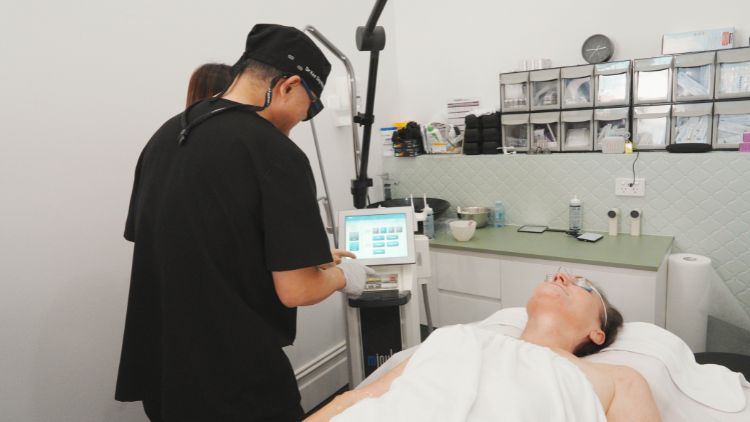
Intense pulsed light directs controlled pulses of broad-spectrum light into the skin. Selected wavelengths are absorbed by targets such as melanin in pigmentation and haemoglobin in visible vessels. An IPL photofacial, sometimes written as a photo facial, generally refers to IPL treatment used for uneven tone, redness and visible sun-related changes.
These light-absorbing targets are known clinically as chromophores. In simple terms, they are structures that absorb particular parts of the light spectrum.
When the correct wavelengths and settings are selected, light energy converts to heat within the intended target. The aim is to affect that target while limiting unnecessary heating of the surrounding skin.
Unlike a laser, IPL does not emit one concentrated wavelength. Filters remove parts of the spectrum so that the remaining range is more appropriate for the concern being treated.
What does IPL target?
IPL may be considered for several concerns when assessment confirms that the target is suitable:
- Freckles and selected superficial sun spots
- Uneven pigmentation caused by photodamage
- Diffuse facial redness
- Selected visible vessels
- General uneven skin tone
- Certain forms of acne-related redness
Pigmentation covers more than one diagnosis. An isolated solar lentigo, post-inflammatory pigmentation, melasma and a changing pigmented lesion require different clinical decisions.
A practitioner should therefore establish what the pigment is before treating it. A new, changing, bleeding or unusual spot requires appropriate medical assessment rather than cosmetic light treatment. Healthdirect advises seeing a doctor when a spot changes in size, shape, colour or texture, appears different from other lesions, bleeds or does not heal.
Is every IPL machine the same?
No. IPL is a technology category rather than one standardised treatment.
Differences between individual systems include:
- Available wavelength filters
- Energy or fluence delivery
- Pulse duration and sequencing
- Cooling method
- Handpiece size and skin contact
- Software and treatment modes
- Treatment speed
- Level of operator control
These variations matter because a device with suitable filters and precise controls may be more appropriate for one concern than another. The practitioner must also know how to adjust the system for skin tone, treatment area and visible response.
An overview of BroadBand Light therapy
BroadBand Light therapy is Sciton’s proprietary approach to intense pulsed light treatment. It delivers controlled pulses of broad-spectrum light through interchangeable filters for selected pigment and vascular concerns. Current BBL platforms also include device-specific cooling, treatment modes and automated delivery features intended to support customisable treatment.
BBL developed from the wider IPL category rather than replacing it with a completely different type of energy. Sciton introduced its BroadBand Light platform in 2004, followed by BBL HERO in 2020 and BBL HEROic in 2024. These dates and performance descriptions come from the manufacturer and should not be interpreted as independent proof that BBL is universally superior to every IPL platform.
W Medical Aesthetics currently offers BBL HEROic + MOXI treatment for individually assessed concerns involving tone, pigmentation, redness and texture.
Is BBL a laser?
BBL is often described informally as a “BBL laser” or “laser facial”. BBL is classified separately from lasers.
A laser usually delivers a specific wavelength through a concentrated beam. BBL uses filtered, broad-spectrum pulsed light. More accurate terms include:
- BBL treatment
- BroadBand Light therapy
- Pulsed-light treatment
- Light-based skin treatment
This distinction is useful because BBL should not be assumed to have the same tissue effects, treatment depth or recovery profile as fractional or ablative lasers.
What is a BBL facial?
A BBL facial is a patient-facing term for BroadBand Light treatment performed across part or all of the face. Depending on the assessment, it may be used for:
- Freckles and selected sun-related pigment
- Diffuse facial redness
- Uneven tone
- Visible photodamage
- Overall skin clarity
The term does not describe one fixed protocol. A treatment focused on vascular redness may use different filters, pulse widths and energy settings from one focused on superficial pigment.
The face is not the only possible treatment area. The neck, chest and hands may also be assessed when sun-related changes extend beyond the face.
What distinguishes newer BBL systems?
Sciton states that BBL HEROic uses nine interchangeable wavelength filters, spot adapters, integrated cooling and automated pulse-placement technology. Its Skin Positioning System tracks handpiece movement, while Intelligent Control adjusts pulse delivery as the handpiece changes speed, angle or direction.
These features may influence:
- Filter selection for different targets
- Application on flat and curved skin
- Consistency of pulse placement
- Treatment of small focal concerns
- Improved efficiency over larger areas
Treatment decisions still rely on clinical judgement. Automated features still require the practitioner to identify the concern, select suitable parameters and assess the skin’s response.
BBL vs IPL for common skin concerns
Both BBL and other IPL systems may improve selected pigmentation and vascular concerns. Neither is automatically suitable for every patient. The type and depth of the target, skin tone, recent sun exposure, treatment history, device capability and selected settings determine whether light-based treatment is appropriate.
BBL and IPL for sun spots and freckles
Both technologies can target superficial melanin found in selected freckles and solar lentigines. The pigment absorbs light energy and may temporarily become darker after treatment.
Over the following days, treated areas may gradually fade or develop light flaking. The response varies according to the depth and nature of the pigment.
Proper assessment helps guide appropriate treatment decisions. A stable freckle is different from melasma, post-inflammatory pigmentation or a lesion that requires medical examination. Persistent, irregular or changing lesions should not be treated solely because they resemble a sun spot.
BBL and IPL for redness and visible vessels
Both BBL and suitable IPL devices can direct filtered light towards haemoglobin in selected visible vessels. The resulting heat can affect the vessel while limiting exposure to surrounding structures.
Suitability depends on:
- The cause of the redness
- Vessel size and depth
- Whether redness is focal or diffuse
- The selected filter and pulse settings
- The person's unique skin features
Neither BBL nor IPL should be described as a cure for rosacea. Rosacea is a chronic condition with several possible features and triggers. Light-based treatment may reduce selected vascular signs, but it does not remove the underlying tendency to flare.
BBL and IPL for acne and post-acne redness
Light-based treatment can have a role in selected acne-related concerns, but “acne” should not be treated as a single target.
Active inflammatory acne, residual red marks and post-inflammatory pigmentation involve different processes. The treatment selected for one may not be appropriate for another.
Some IPL and BBL protocols use specific wavelength ranges for inflammatory acne or associated redness. However, light treatment is not a universal first-line solution. A plan may need to address skincare, medicines, inflammation, scarring and pigmentation separately. Research has reported improvement in acne-related post-inflammatory erythema with IPL, but treatment responses and adverse effects vary.
BBL vs IPL for texture and fine lines
BBL and IPL may support gradual improvement in overall skin appearance when photodamage contributes to uneven tone or mild surface changes. They are not equivalent to fractional or ablative resurfacing.
More pronounced texture concerns may need a modality designed to create controlled fractional treatment zones. Examples include acne scarring, deeper lines and more established surface irregularity.
MOXI may be considered as a complementary treatment when tone and texture require different approaches. MOXI is a non-ablative, fractionated 1927 nm diode laser, whereas BBL is a pulsed-light platform. The combination should follow assessment rather than being applied as a standard package.
BBL vs IPL for melasma
Melasma is a chronic, relapsing pigment condition. It is not the same as an isolated freckle or sun spot.
Light and heat can aggravate pigment activity in some patients. Published reviews have reported relapse, post-inflammatory hyperpigmentation and rebound darkening after laser or light-based melasma treatment. For that reason, IPL or BBL should not be presented as a routine way to “remove” melasma.
Assessment should consider:
- The pigmentation pattern and depth
- Skin tone and previous pigment responses
- Hormonal influences and medication history
- Sun and visible-light exposure
- History of laser or light treatment
- Current skincare and pigment management
IPL vs BBL: What differences could affect your treatment experience?
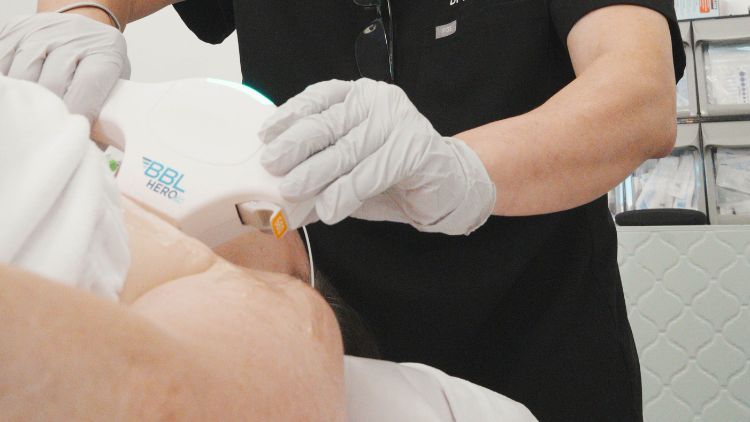
The experience of IPL vs BBL depends more on the individual system and protocol than on the initials alone. Cooling, handpiece movement, pulse pattern, selected filter, treatment area and energy settings can affect comfort and appointment length. Downtime also varies with the target and treatment intensity.
Precision and customisation
Both technologies require parameter selection. The practitioner may adjust fluence, pulse duration, pulse sequence and wavelength filtering according to the target.
A standard “facial” setting is not appropriate for every person. Treatment for visible vessels may differ substantially from treatment for superficial pigment, even when the same platform is used.
BBL HEROic offers device-specific filters and adapters. Other IPL platforms may offer different filter sets and controls. The important question is whether the system has suitable capabilities and whether the practitioner understands how to use them conservatively.
Comfort
Patients often describe pulsed-light treatment as brief warmth, a flash of heat or a snapping sensation. Comfort varies with the area, cooling method, energy setting and individual sensitivity.
Contact cooling or gel may be used, depending on the device. BBL systems use a cooled sapphire crystal, while other IPL systems may use integrated cooling, separate cooling or contact gel.
No light-based procedure should be promised as pain-free. The aim is to keep treatment tolerable while using settings appropriate for the intended target.
Appointment time
Newer high-output systems may cover larger areas more efficiently. This can be relevant when treating the chest, arms, back or other broader areas.
However, there is no universal BBL or IPL treatment time. Appointment length can include:
- Clinical assessment
- Photography
- Skin preparation
- Patch testing where indicated
- Device treatment
- Immediate aftercare
A brief device pass should not be confused with the time required for a considered medical appointment.
Downtime
Downtime is often limited, but individual responses vary. Temporary changes can include:
- Warmth
- Redness
- Mild swelling
- Darkening of treated pigment
- Temporary sensitivity
Higher epidermal pigment, ultraviolet exposure and excessive fluence can increase the likelihood of adverse reactions. A randomised controlled study found that skin pigmentation, energy level and ultraviolet exposure influenced IPL-related side effects.
“Zero downtime” is therefore not an appropriate universal claim. Some patients may return to usual activities quickly, while visible redness or darkened pigment may remain for longer.
Number of appointments
There is no fixed course that applies to every BBL or IPL patient.
An isolated sun spot may require a different plan from diffuse photodamage. Facial redness, active acne and maintenance of overall tone also involve different endpoints.
The recommended number and spacing of appointments depend on:
- The identified concern
- Its extent and depth
- The skin’s response
- Treatment intensity
- Ongoing sun exposure
- The desired treatment outcome and improvement
A clinician should reassess progress rather than prescribing an identical course for every patient.
Which is better, BBL or IPL?
BBL is not universally better than IPL, and IPL is not one standardised treatment. A well-selected device used with appropriate filters and conservative settings may matter more than the category name. The right option is the one Dr Wong can match to your skin concern, treatment history and expected outcome after a careful assessment.
BBL may be considered when
BBL may suit the treatment plan when:
- A Sciton BBL platform is available
- Its filters suit the identified target
- Device-specific cooling is clinically relevant
- Efficient coverage of a broader area is useful
- The clinician recommends it after assessment
The newer technology may offer practical advantages within an appropriately planned treatment. Those features do not make it suitable for every pigment condition or skin type.
Another IPL platform may be appropriate when
A different IPL system may be suitable when:
- Its filters match the intended target
- Its settings allow careful personalisation
- The practitioner has substantial experience with that device
- The person is clinically suitable for treatment
- The recommendation is based on assessment rather than branding
An older or less widely marketed system is not automatically ineffective. Equally, a newer device cannot compensate for incorrect diagnosis or unsuitable settings.
Neither may be the first choice when
BBL and IPL may not be appropriate when:
- The pigmentation has not been identified
- A spot is new, unusual or changing
- Melasma or post-inflammatory pigmentation may be aggravated
- The skin is recently tanned
- An active infection or inflammatory condition is present
- The primary concern is deep scarring or significant texture change
- Medicines or medical history increase light sensitivity
- Expected outcomes cannot be achieved with pulsed light
Patients comparing broader skin treatments at W Medical Aesthetics should begin with the concern rather than selecting a machine from its marketing name.
What to expect from a BBL facial or IPL photofacial
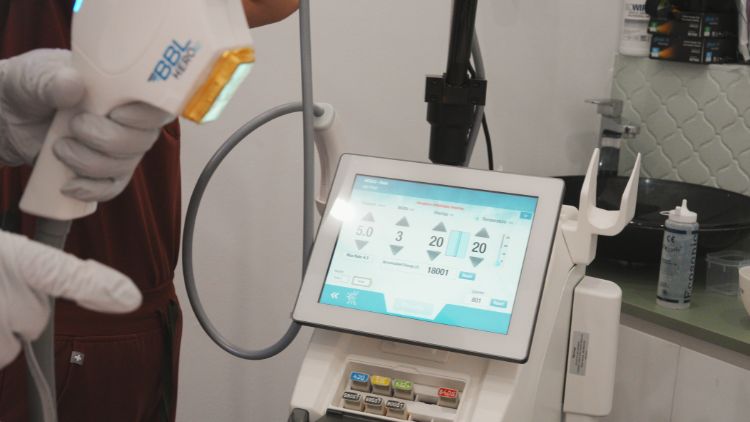
A BBL facial or IPL photofacial begins with assessment of the skin concern, medical history and recent sun exposure. During treatment, protective eyewear is used and controlled light pulses are delivered through settings selected for the target. Temporary warmth, redness or darkening of treated pigment may follow.
1. Complete a skin evaluation before treatment
The consultation should clarify what is being treated and whether pulsed light is suitable.
Assessment may cover:
- Medical and skin history
- Recent tanning or substantial sun exposure
- Medicines and skincare that affect sensitivity
- Previous pigment or scarring responses
- Earlier laser or light treatments
- Pregnancy and nursing treatment guidance
- Recognising realistic treatment limitations
Photography can document the starting point. Patch testing may also be appropriate when the response is uncertain or the practitioner wants to assess conservative settings first.
2. Prepare and protect the treatment area
The treatment area is cleansed before light delivery. The device may require direct skin contact or a contact gel.
Protective eyewear is used because the treatment produces bright pulses of light. Cooling may come from the handpiece itself or from another cooling method.
The practitioner selects filters and parameters based on the target. Settings can change during the appointment if the skin response indicates that adjustment is required.
3. Administer controlled light energy.
The handpiece moves across the treatment area or targets individual spots, depending on the protocol.
Each pulse may produce brief warmth or a snapping sensation. The practitioner observes the skin throughout treatment rather than relying solely on preset parameters.
Settings should not be expected to remain identical at every appointment. Changes in tanning, medication, target visibility and previous response may require a different approach.
4. Provide post-treatment skin protection
Temporary redness and warmth can occur after treatment. Selected pigmented areas may become darker before gradually fading or flaking.
Aftercare commonly focuses on:
- Gentle cleansing and skincare
- Avoid excessive heat and skin irritation.
- Not picking at darkened pigment
- Regular broad-spectrum UV protection
- Following individual clinic instructions
- Reporting blistering, marked swelling or unexpected pain
Future sun exposure can create new pigment and contribute to recurrence. Treatment does not make the skin permanently resistant to photodamage.

Safety, suitability and treatment limitations
IPL and BBL can be appropriate for selected patients, but safe treatment depends on accurate assessment, device knowledge and conservative parameter selection. Skin tone, epidermal pigment, tanning, medicines, active conditions and previous treatment responses can all change the risk profile.
Skin tone and pigment-related risk
Melanin absorbs light. This makes it a useful target when treating selected brown pigment, but it also means background epidermal pigment can absorb treatment energy.
Greater epidermal melanin may increase the risk of:
- Excessive heating
- Burns
- Discolouration that develops after skin injury
- Hypopigmentation
- Uneven treatment response
Research has shown that skin pigmentation and ultraviolet exposure influence IPL-related side effects. Suitability should therefore not be decided from a generic skin-colour label alone. The practitioner must consider tanning, pigment history, target contrast and the specific device settings.
A device marketed for a wider range of skin types still requires conservative assessment. Advanced device features can broaden treatment options, but careful assessment remains essential for protecting the skin.
Situations requiring further clinical assessment
Further assessment may be needed if any of the following apply:
- Recent tanning or substantial sun exposure
- Use of medications that may increase sensitivity to light
- Current skin irritation, infection or broken skin
- A history of abnormal scarring
- Past episodes of post-inflammatory pigmentation
- Pregnancy or breastfeeding
- A suspicious or evolving pigmented lesion
- A previous adverse response to light treatment
Pregnancy and breastfeeding policies can vary between clinics and treatment types. Patients should confirm the clinic’s current policy rather than assuming that one rule applies universally.
Limitations
BBL and IPL:
- Results may not include complete clearance.
- Cannot prevent future sun-related changes
- Are not suitable for every pigment condition
- Does not take the place of clinical diagnosis
- Optimal outcomes may involve a series of appointments.
- Periodic follow-up sessions may help maintain results.
- Cannot reproduce identical outcomes for every patient
Results also depend on the starting concern. A person with diffuse redness may have a different response and treatment plan from someone with a small number of superficial sun spots.
How W Medical Aesthetics approaches BBL treatment in Adelaide
At W Medical Aesthetics, BBL HEROic is considered within an individual treatment plan rather than presented as a universal solution. Dr Kee Sing Wong assesses the concern, treatment history and suitability before recommending BBL, a complementary treatment or another approach.
Dr Wong is the Director and Lead Doctor of W Medical Aesthetics and a Fellow of the Australasian College of Cosmetic Surgery and Medicine. The clinic’s published approach centres on individual clinical assessment and treatment plans designed around natural-looking, balanced outcomes.
Assessment distinguishes between treating visible pigmentation and diagnosing a pigmented lesion. Cosmetic light treatment should not be used as a substitute for medical investigation when a mark is new, changing or clinically uncertain.
When BBL HEROic is appropriate, Dr Wong selects the treatment plan according to:
- The identified concern
- Individual skin tone and pigment characteristics
- Recent sun exposure
- Results from earlier treatment sessions
- The required filter and delivery mode
- Realistic expected changes
- Post-procedure care and future maintenance
BBL HEROic may be used by itself when selected pigment or vascular concerns are the main focus. MOXI may be considered alongside it when fractional treatment of tone or texture is also relevant. The two technologies perform different roles and should not be combined automatically.
W Medical Aesthetics is located at 74 Unley Road, Unley, South Australia. Please book an appointment before attending the clinic.
Book a consultation with Dr Wong to discuss the nature of your skin concern and whether BBL HEROic, another light-based treatment or a different approach suits your skin.
FAQs
Is BBL better than IPL?
BBL is not universally better than IPL. It is a proprietary Sciton IPL platform with device-specific filters, cooling and pulse-delivery features. Another IPL system may still be suitable when it has appropriate capabilities and is used by an experienced practitioner. Outcomes depend on the diagnosed concern, skin characteristics, parameters and treatment plan.
Is BBL a laser treatment?
BBL is not technically a true laser. It delivers filtered, broad-spectrum intense pulsed light across a range of wavelengths. A laser usually delivers a more specific wavelength through a concentrated beam. “BBL laser” is commonly used as a marketing term, but BroadBand Light therapy or BBL treatment is more technically accurate.
Is a photofacial the same as IPL treatment?
A photofacial is a broad patient-facing term rather than one standardised technology. It commonly refers to IPL or BBL treatment performed on the face for concerns such as redness, selected pigmentation and uneven tone. Patients should confirm the device, filters and treatment approach because clinics may use the term for different protocols.
Can BBL or IPL make pigmentation worse?
Yes, pigmentation can worsen when treatment is unsuitable or excessive. Recent tanning, higher epidermal melanin, aggressive settings and pigment conditions such as melasma can increase the risk of burns or post-inflammatory pigment changes. Assessment should establish the pigment type, treatment history and current sun exposure before light-based treatment proceeds.
Can BBL and IPL be used on darker skin tones?
Suitability cannot be answered with a universal yes or no. Background melanin can absorb treatment light and raise the risk of unwanted heating or pigment changes. The decision depends on the concern, melanin level, tanning, previous pigment responses, device filters and conservative parameter selection. A patch test may be considered where clinically indicated.
Can BBL be combined with MOXI?
BBL and MOXI can be considered together when different aspects of the skin require treatment. BBL primarily uses pulsed light for selected pigment and vascular targets. MOXI is a fractional, non-ablative 1927 nm laser used for different aspects of tone and texture. Combination treatment should follow individual assessment rather than a standard protocol.
This information is educational and does not replace an individual medical assessment. Treatment suitability, settings, risks and expected changes should be discussed with the treating clinician.