A practical estimate you may hear for Rejuran is around 6 to 12 months after an initial treatment course. That range is a planning guide, not a promise, however. Published polynucleotide research is still small and varied, so it does not establish one dependable duration for every person, treatment area or protocol.
What you notice can also change at different times. Early swelling is part of recovery, not the final result. Any Rejuran results may emerge gradually, and they may fade gradually rather than disappear on a particular day.
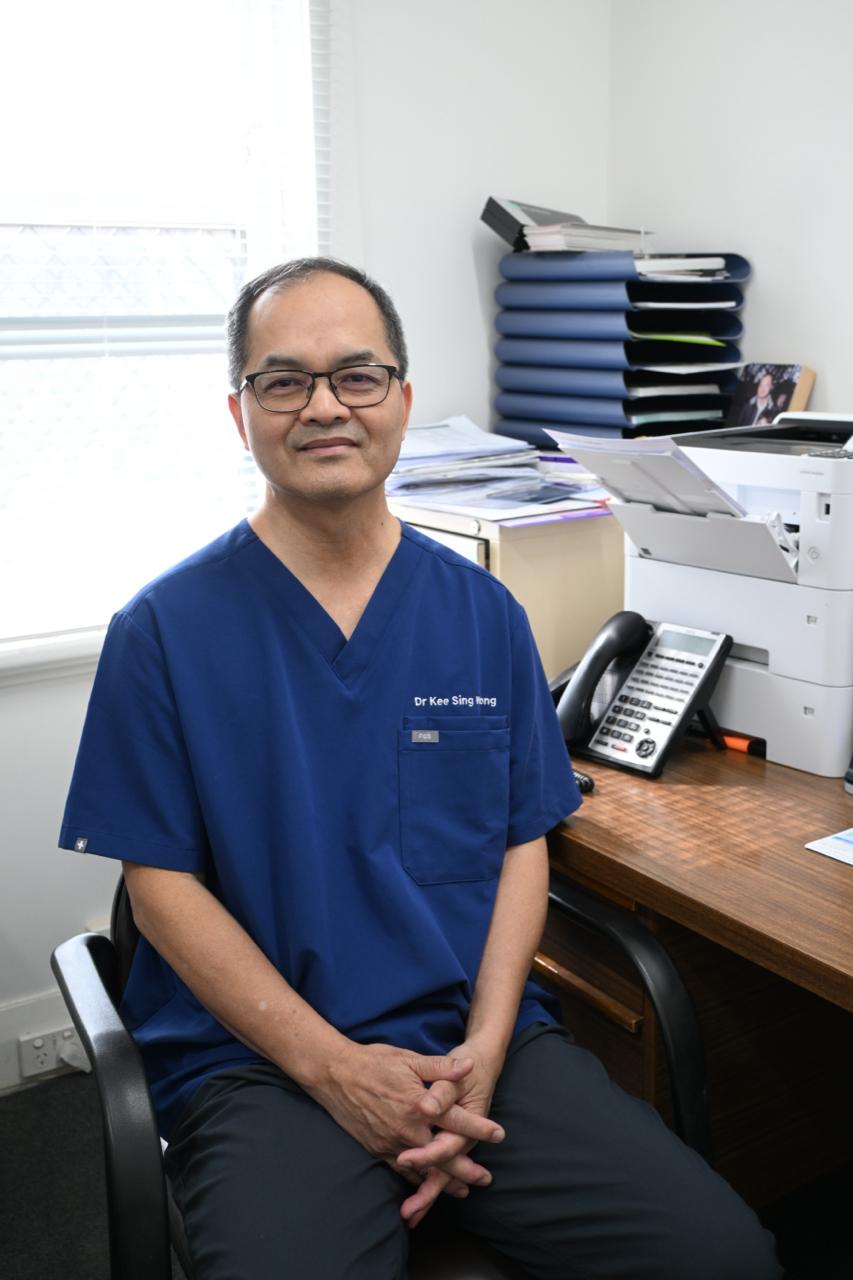
At W Medical Aesthetics, Dr KS Wong reviews Rejuran in the context of your starting skin, the area treated and what you hoped to improve. This helps you decide whether the result was meaningful before discussing maintenance.
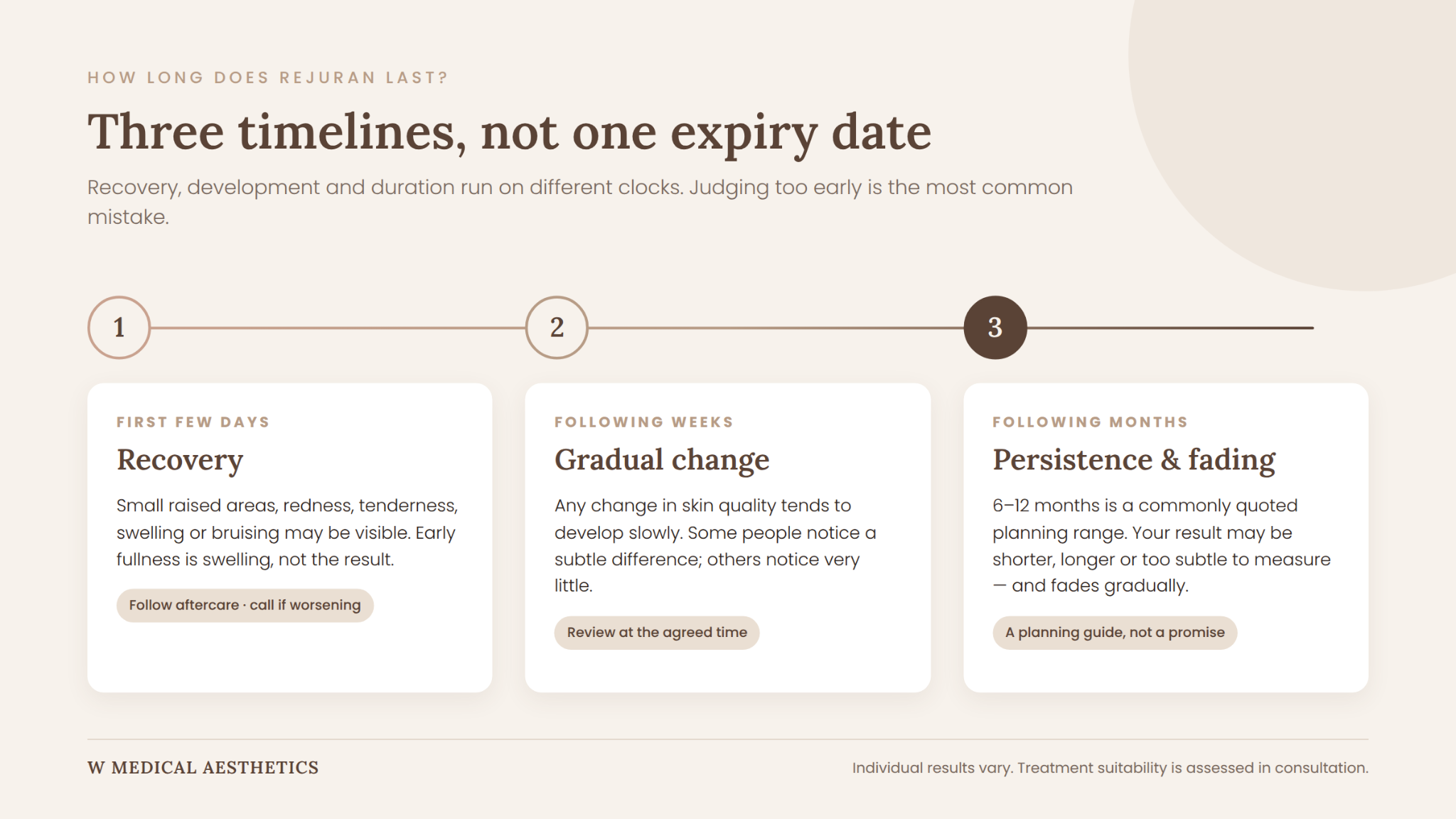
There are three timelines to understand
When people ask how long Rejuran lasts, they are often combining recovery, development and duration. Separating those three clocks gives you a more realistic way to plan.
1. The first few days: Recovery rather than results
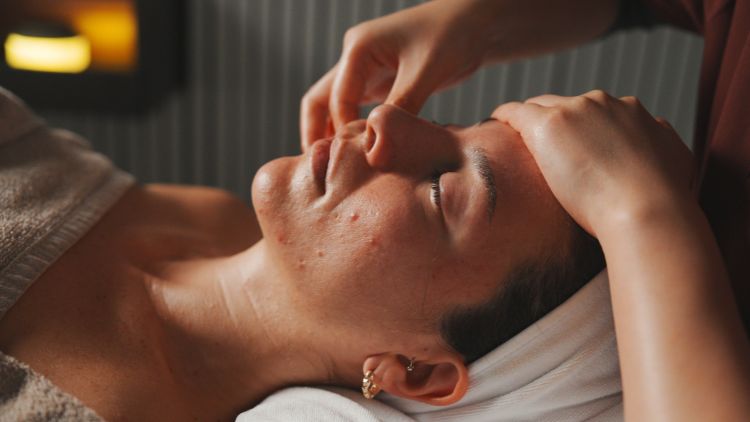
Rejuran is injected at multiple points. Small raised areas, redness, tenderness, swelling or bruising may be visible afterwards. How quickly these settle depends on the treatment area, injection technique, your skin and your tendency to bruise or swell.
It can be tempting to judge the treatment while the skin still looks temporarily fuller from swelling. Try not to treat that early appearance as the result you should maintain. Follow your aftercare instructions and contact the clinic if symptoms are severe, worsening or different from what was discussed.
2. The following weeks: Gradual change
Polynucleotide treatments are generally used with the expectation of gradual skin-quality change, not instant structural volume. You may first notice a subtle difference in how the skin feels or reflects light. Another person may notice very little after the same interval.
This is why a review scheduled too early can lead you to draw the wrong conclusion. Dr Wong will tell you when enough time has passed for a useful assessment based on the product, area and plan used for you.
3. The following months: Persistence and fading
If a change develops, it may remain noticeable for months and then soften over time. Australian clinics commonly use a 6-to-12-month range when discussing longevity, but your result may be shorter, longer or too subtle to measure confidently.
The most honest answer is therefore not a fixed expiry date. It is a review window: compare your skin with consistent photographs, consider whether the original concern has changed and decide whether that change still matters to you.
What can affect how long Rejuran results remain noticeable?
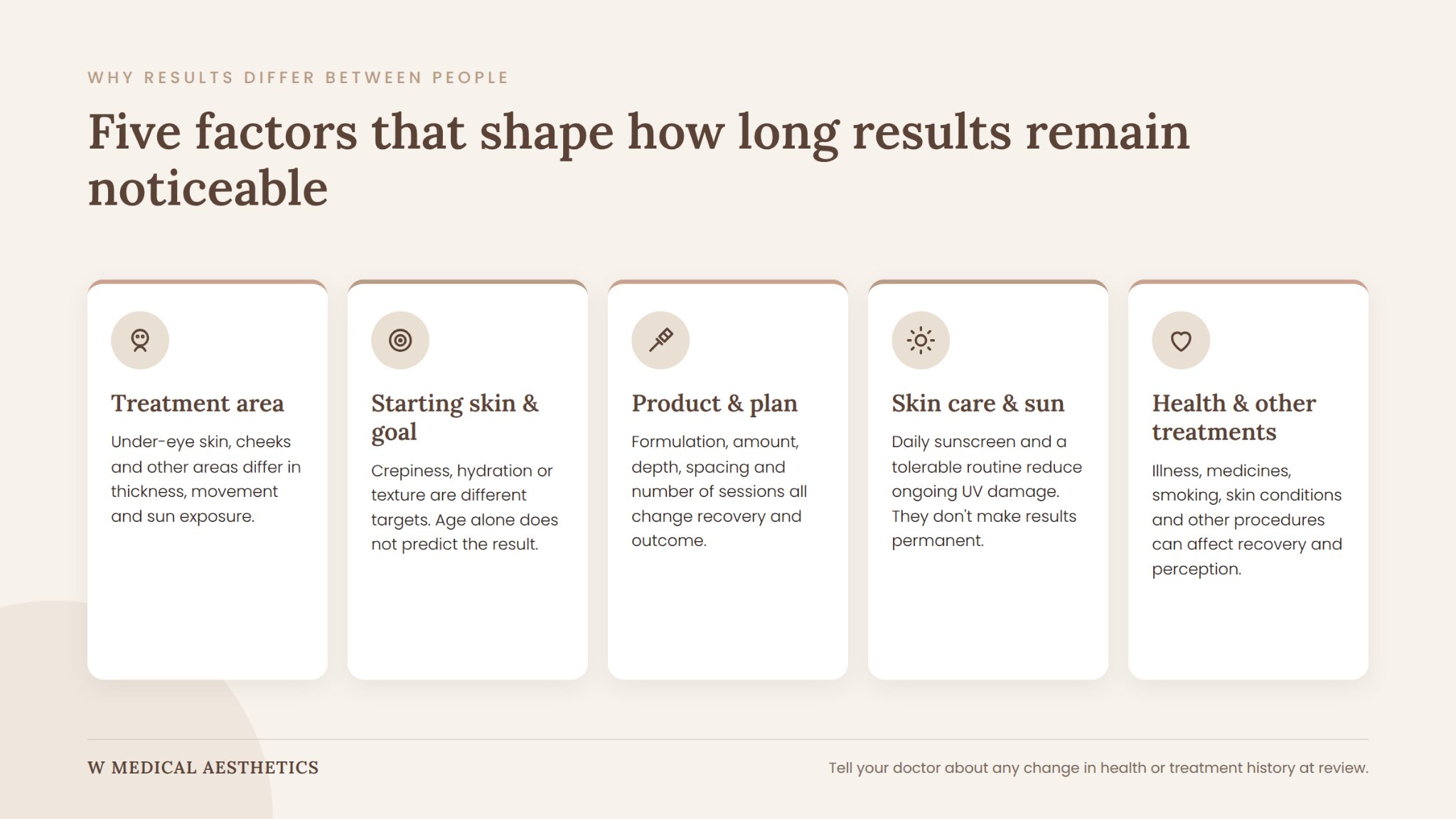
Several factors can influence how long Rejuran results remain noticeable, including the treatment area, skin condition, the way your skin responds to the treatment, your skincare routine and your lifestyle.
The treatment area
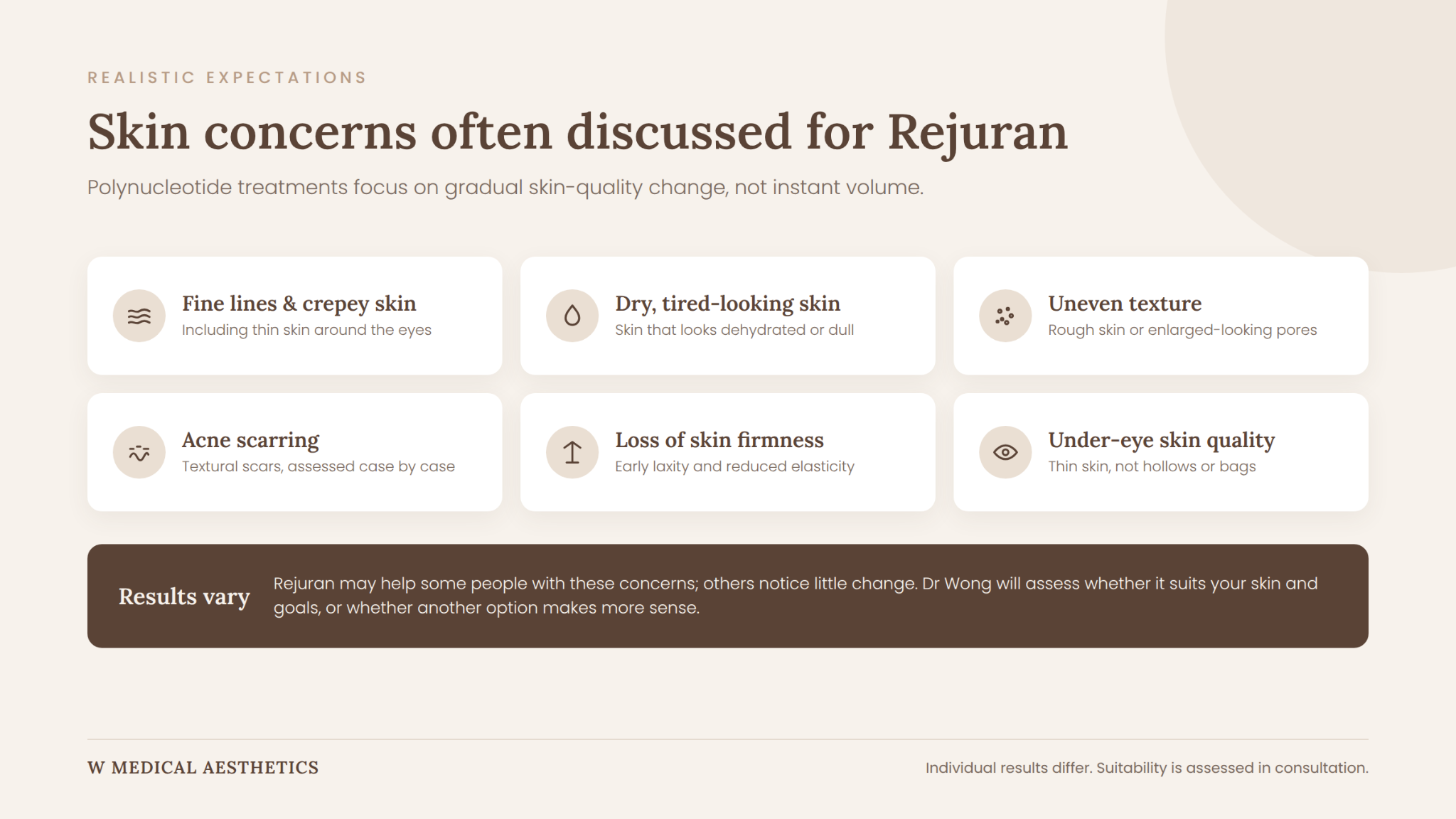
Thin under-eye skin, the cheeks and other areas do not behave in the same way. Movement, skin thickness, sun exposure and the concern being treated can all affect how a result presents. A duration quoted for one area should not automatically be applied to another.
Your starting skin and goal
A person looking for a subtle improvement in crepiness is judging a different outcome from someone focused on hydration or texture. Age alone does not predict the result. Skin quality, active inflammation, pigmentation, scarring, lifestyle and previous procedures can be more relevant.
The product, amount and treatment plan
Rejuran is a product family, and treatment planning may differ by formulation and area. The amount placed, injection depth, spacing and number of sessions can change both recovery and the result. Dr Wong should explain what is planned for you rather than relying on a standard package.
Your skin care and sun exposure
Daily broad-spectrum sunscreen and a skin-care routine you can tolerate will not make a cosmetic procedure permanent. They can, however, help reduce ongoing UV-related damage and irritation that may make skin-quality concerns more noticeable.
Your health and other treatments
Illness, medicines, smoking, active skin conditions and procedures performed before or after Rejuran may influence recovery or how you perceive the result. Tell Dr Wong about changes to your health or treatment history at review, even if they seem unrelated.
Maintenance should be a decision, not a subscription
Rejuran maintenance can be reasonable when you had a benefit that mattered to you, recovery was acceptable and the expected value of another treatment still outweighs the risks and cost.
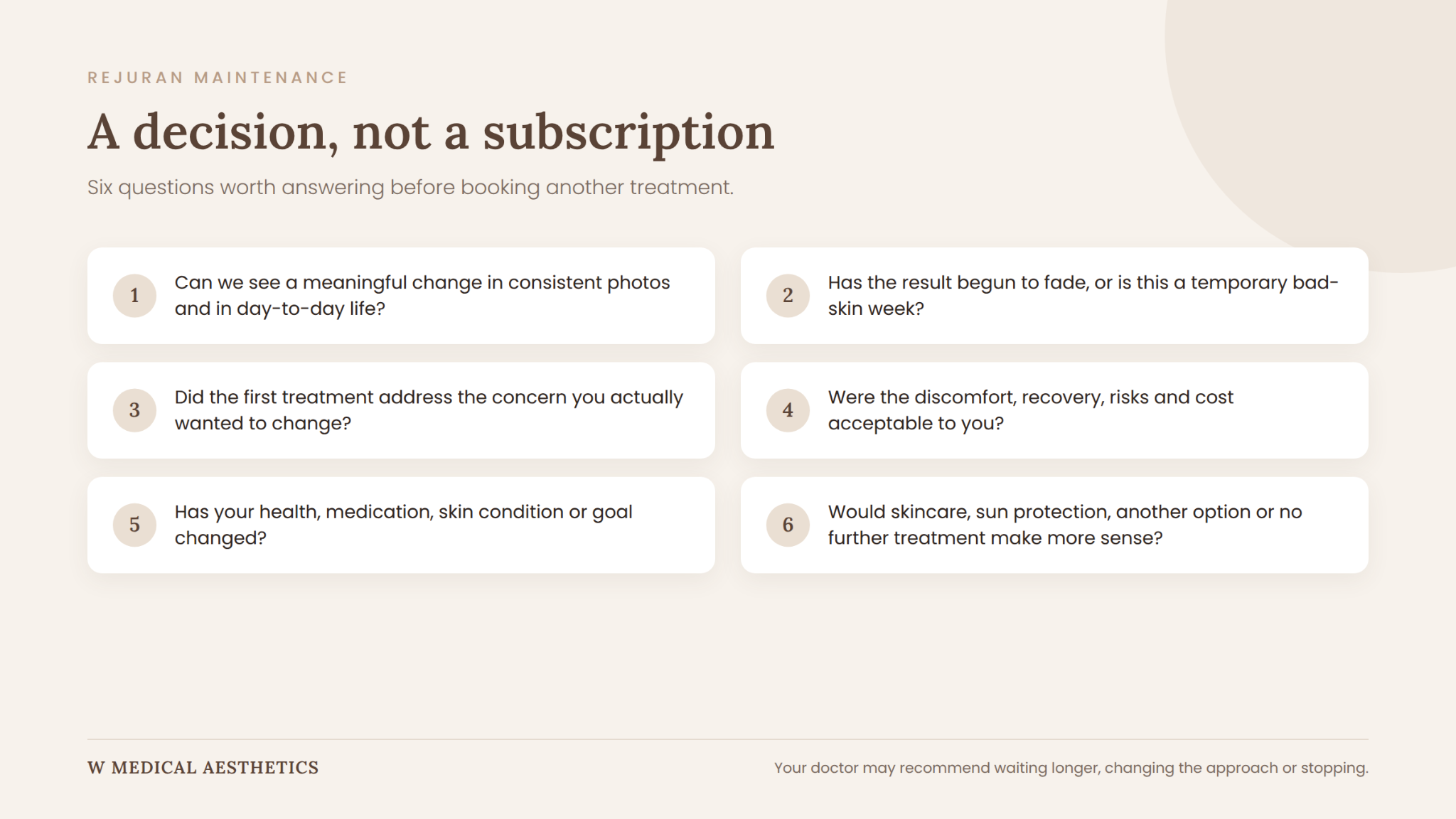
A thoughtful maintenance conversation asks:
- Can we see a meaningful change in consistent photographs and in what you notice day to day?
- Has the result begun to fade, or are you responding to a temporary bad-skin week?
- Did the first treatment address the concern you actually wanted to change?
- Were the discomfort, recovery, risks and cost acceptable to you?
- Has your health, medication, skin condition or goal changed?
- Would skincare, sun protection, another treatment or no further treatment make more sense now?
If the benefit was difficult to see, repeating the same plan more often may not improve the decision. Dr Wong may recommend waiting longer, changing the approach or stopping.
When should you review Rejuran results?
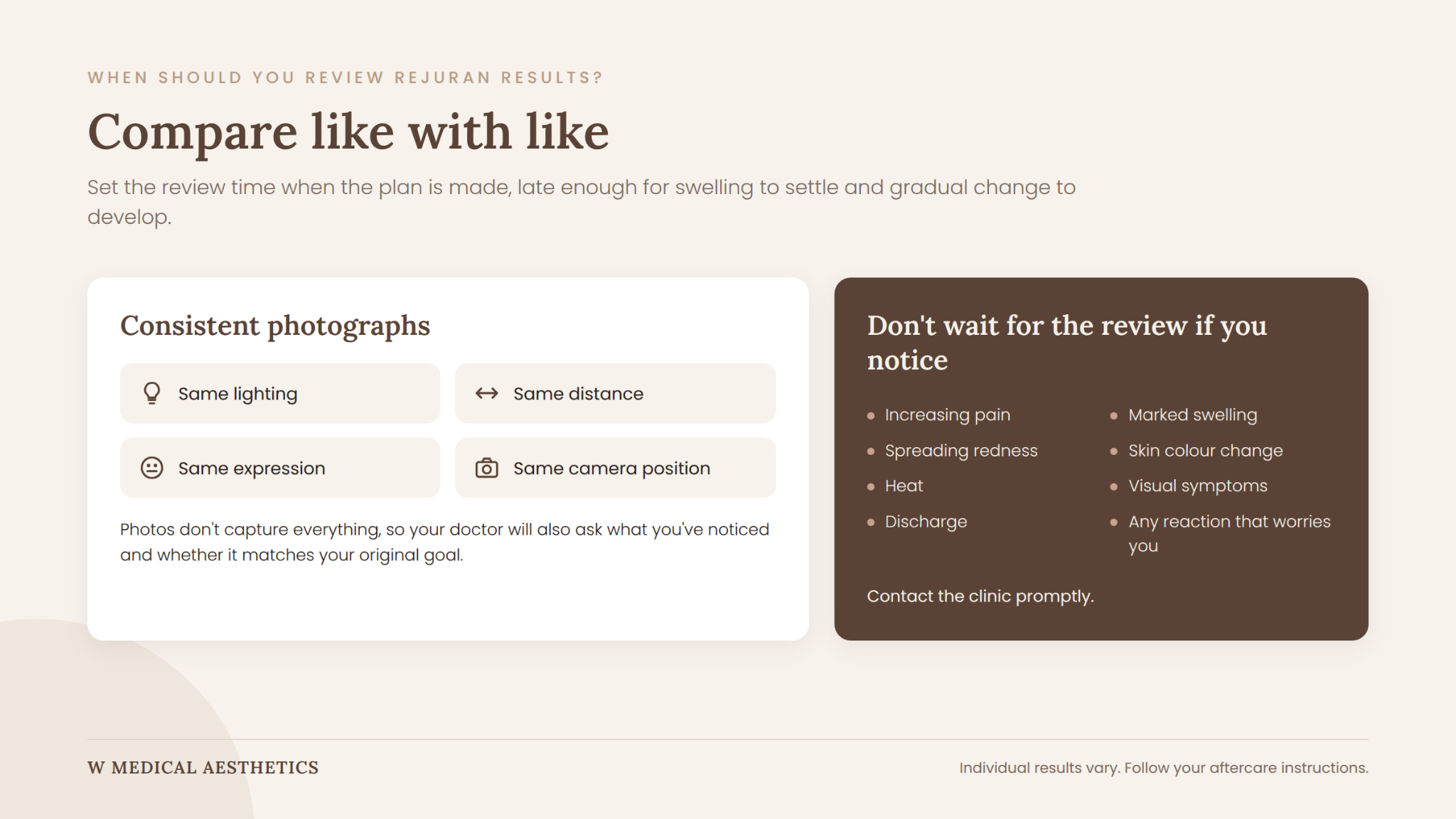
Your review time should be set when the treatment plan is made. It needs to be late enough that early swelling has settled and gradual change has had time to develop. A consistent review is more useful than checking the mirror under different light every day.
Before-and-after photographs can help when they use the same lighting, distance, expression and camera position. They still do not capture everything you feel about your skin, so Dr Wong will also ask what you have noticed and whether it aligns with your original goal.
Please contact the clinic earlier if you develop increasing pain, spreading redness, heat, discharge, marked swelling, skin colour change, visual symptoms or any reaction that concerns you. Do not wait for a routine review when something does not feel right.
Can one Rejuran session be enough?
Some people may notice Rejuran Healer results after one session; others may not. A clinician may discuss a course because effects in published studies and clinical protocols have often been assessed across multiple treatments. However, research methods, formulations, intervals and outcomes differ, and a course should not be presented to you as a guaranteed formula.
If you are unsure about committing to several sessions, ask Dr Wong what will be evaluated after the first treatment and whether there is a sensible point to pause. Knowing that in advance can make the decision feel less open-ended.
What the research can and cannot tell us
A 2024 systematic review found nine studies involving 219 patients and described the overall evidence as low to moderate quality. A later review of randomised trials also found varied protocols and outcome measures. Both support further research before a universal schedule or longevity claim can be made.
That uncertainty does not mean no one benefits. It means your result should be assessed as your result, without turning an average or a clinic estimate into a certainty.
Conclusion
The duration of Rejuran results varies between individuals and depends on factors such as your skin condition, treatment plan and how your skin responds over time. Rather than focusing only on how long the effects last, it is important to consider whether the treatment is supporting the skin changes you want to achieve.
Dr Wong can assess your skin and discuss what timeline may be realistic for your goals, including when results may become noticeable, how long they may be maintained and whether ongoing treatments are appropriate at W Medical Aesthetics in Adelaide.
Practitioner and information scope
Dr Kee Sing Wong (Ahpra MED0000996242) is a registered medical practitioner with general registration and specialist registration in general practice. Registration status: Registered, as stated in the clinic’s professional profile. His FACCSM (Med) fellowship is not specialist registration in plastic surgery.
This article provides general information, not individual medical advice or a recommendation to undergo treatment. Suitability, outcomes, recovery and maintenance vary. Discuss procedure-specific risks, alternatives and the option not to proceed with the treating practitioner.