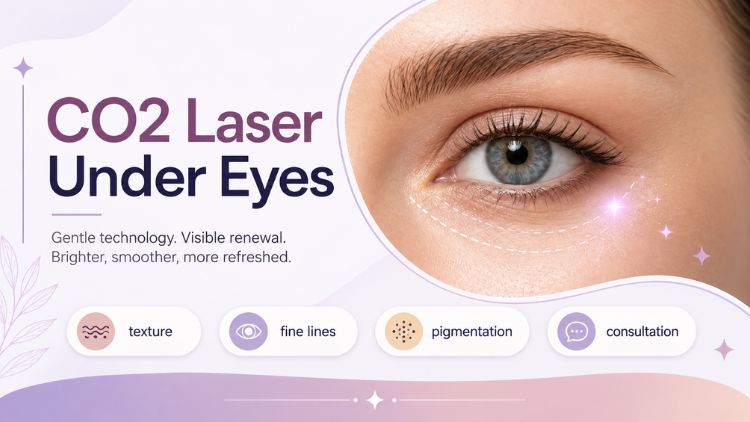
Fractional CO2 laser under eyes may be considered for selected fine lines, crepey texture and sun-related surface change. It creates controlled microscopic treatment columns that support healing and collagen remodelling. Settings and treatment boundaries require particular care because eyelid skin is thin and the eye must be protected from laser energy.
CO2 laser does not address every concern that can appear under the eyes. It cannot remove a prominent fat pad, fill a tear-trough hollow or replace surgery when there is substantial loose skin. Dr Wong begins by working out whether the feature you want to change is mainly skin texture, pigment, muscle movement, hollowing, swelling, fat or eyelid position.
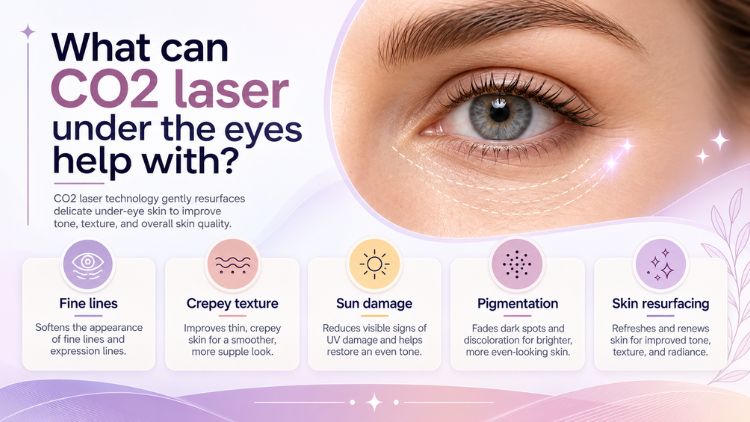
What can CO2 laser for under the eyes help with?
CO2 laser resurfacing under eyes is most relevant when the main concern is skin texture, static fine lines or crepey skin. Fractional CO2 may soften the appearance of static fine lines, improve selected rough or crepey texture and support gradual remodelling in carefully assessed skin. A recent clinical study reported measurable improvement in static periorbital wrinkles after fractional CO2 treatment. However, one study cannot predict how an individual patient will respond.
You may notice early surface change after the treated skin has healed, while remodelling can continue for several months. The degree of improvement depends on the starting concern, treatment settings, skin characteristics, healing and aftercare. Complete removal of lines cannot be promised.
Fine lines and crepey texture
Static lines that remain when the face is at rest may respond differently from lines caused mainly by smiling or squinting. CO2 resurfacing treats the skin; it does not stop the muscles around the eye from moving. If movement is the main reason a line appears, resurfacing alone may leave part of it visible.
Mild skin laxity
Collagen remodelling may provide a degree of firmness in selected skin, but laser does not remove a fold of excess eyelid skin. When laxity is more pronounced or affects eyelid position, a surgical assessment can give you a more realistic comparison.
Pigmentation and dark circles
Darkness under the eyes can come from pigment, visible vessels, shadow from hollowing, skin thickness or a combination. CO2 laser is not a universal treatment for dark circles. If the shadow is structural, resurfacing the surface may not change it. If pigmentation is prominent, Dr Wong considers the risk of post-inflammatory darkening when deciding whether CO2 resurfacing is appropriate.
Under-eye bags and hollows
A bulging fat pad and a hollow tear trough are changes in contour, not simply skin texture. CO2 laser does not remove a fat pad or restore lost volume. Treating the surface without recognising the deeper structure can leave the feature you notice largely unchanged.
Why treatment near the eyes needs particular care
Laser treatment near the eyes requires appropriate eye protection and careful technique because unprotected laser exposure can cause ocular injury. ARPANSA states that all light-based therapies are hazardous to the eyes and that inadequate protection can cause injury ranging from temporary visual disturbance to permanent damage, especially near the eye.
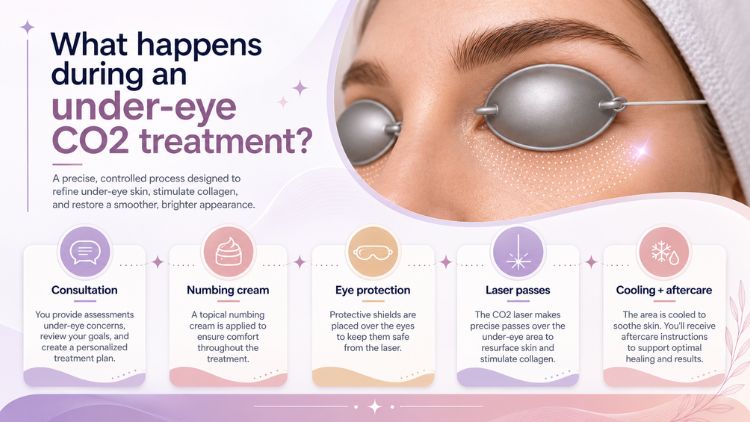
With CO2 laser eyelids treatment, appropriate eye protection is an essential part of procedural planning. The type of shield and how it is used depend on the treatment area and clinical plan. You should be told what protection is proposed, who will place it and what you may feel before the procedure begins.
Swelling can be particularly noticeable around the lower eyelid. Even an expected degree of puffiness can appear more noticeable around the eyes and may temporarily interfere with normal vision if swelling is significant. Plan transport, work and caring responsibilities with that possibility in mind.
What happens during an under-eye CO2 treatment?
A CO2 laser treatment under eyes begins with a review of your skin, eye-area anatomy, medical history, medications and recent sun exposure. The area is cleansed and prepared. Numbing and other comfort measures depend on the proposed intensity.
Eye protection is positioned before laser treatment begins. The laser is then delivered in controlled fractional passes within the planned boundary. Treatment settings may differ between the lower eyelid, crow’s-feet area and adjacent cheek because the skin and underlying structures are not identical.
Before you leave, the clinic should explain how to cleanse and moisturise the area and what to avoid. You should also know when to restart active skincare and which changes require clinical review. Do not rub, pick or add strong products while the skin barrier is healing.
How much recovery should you plan for?
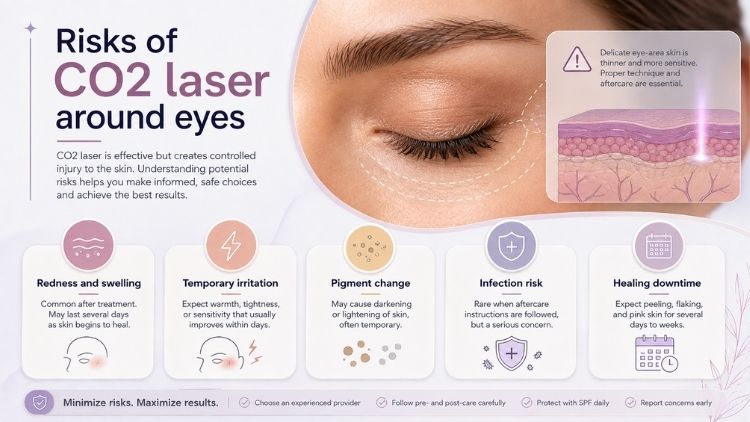
Recovery depends on treatment density and depth. Redness, swelling, warmth, sensitivity, oozing, crusting or peeling can occur. Swelling is often most noticeable in the first part of recovery, while pinkness and sensitivity may persist after the surface has closed.
Leave enough time before work, travel, contact-lens wear, exercise or an important event. The exact advice needs to come from the plan used for you. A lighter setting may involve less visible recovery, although redness, swelling and sensitivity can still vary between people.
Sun protection matters once it is safe to apply the product recommended for you. Recent tanning, a history of post-inflammatory pigmentation or melasma can change the risk-benefit discussion and may lead Dr Wong to modify the plan or recommend another option.
Risks of CO2 laser around eyes
Expected short-term effects can include discomfort, redness, swelling, dryness, peeling and temporary sensitivity. Complications can include burns, infection, cold-sore reactivation, prolonged redness, acne-like eruptions, pigment change, delayed healing, scarring and an unsatisfactory or uneven result.
Rarely, excessive scarring or contraction around the lower eyelid can contribute to ectropion, where the lid turns away from the eye. Ocular injury is another serious risk when eye protection or treatment technique is inadequate. These possibilities are uncommon, but they matter because the consequences can be more than cosmetic.
Contact the clinic if pain, redness or swelling becomes more severe rather than settling, if there is increasing discharge or blistering, or if your vision changes. Sudden eye pain or visual symptoms need urgent medical assessment.
Who may not be suited to under-eye CO2 laser?
CO2 laser under eyes may be unsuitable when there is active infection or inflammation, recent tanning, unstable pigmentation or a history of problematic healing. Pregnancy, certain medications and some eye or eyelid conditions may also affect procedural suitability. Previous eyelid surgery or laser treatment should also be discussed.
A consultation may conclude that your concern is structural rather than a resurfacing problem. It may also show that the expected improvement is too small to justify the recovery or risk. Deciding not to treat the area is a valid outcome.
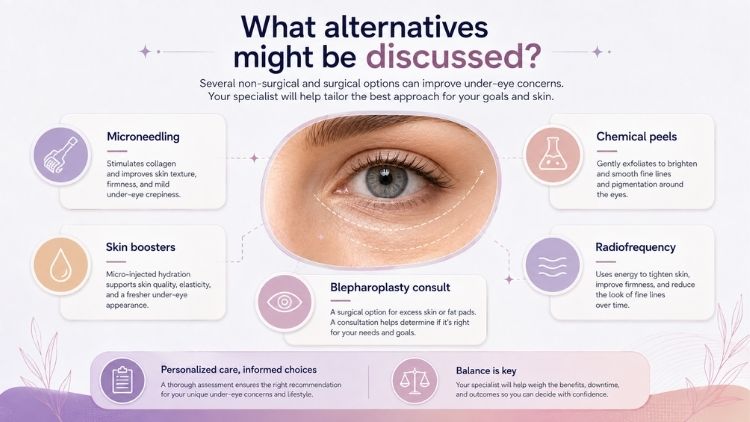
What alternatives might be discussed?
The right alternative depends on what is creating the under-eye concern. Texture, hollowing, prominent fat pads, excess skin and pigmentation are different problems, so a treatment that suits one may do little for another. Dr Wong first identifies the main structure or skin change before discussing alternatives.
When the concern is mainly skin texture
A lighter resurfacing approach, RF microneedling or another skin-quality treatment may be considered depending on skin thickness, pigmentation risk and the amount of recovery you want. These options have different mechanisms and are not automatically safer for every person.
When hollowing creates the shadow
The discussion needs to focus on facial structure and volume rather than only the skin surface. If volume loss is contributing to the shadow, Dr Wong can discuss appropriate medical or procedural options after an individual assessment. These approaches are not suitable for everyone.
When there are prominent bags or excess skin
A surgical opinion may be more appropriate when the concern comes mainly from a prominent fat pad, substantial excess skin or eyelid position. Asking for that opinion does not commit you to surgery. It helps you compare what a surface procedure can and cannot reasonably change.
When pigmentation is the main concern
Sun protection, skincare or a pigment-focused treatment may be more appropriate than ablative resurfacing. The cause of darkness should be assessed first, especially when several factors overlap.
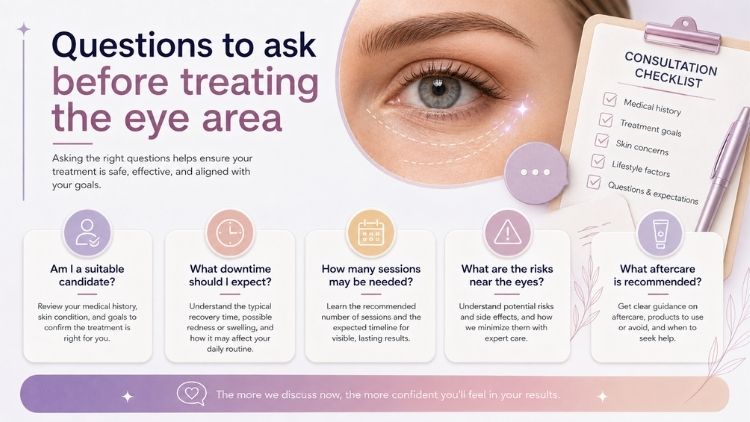
Questions to ask before treating the eye area
Before treating the under-eye area, clarify what concern is being targeted and what CO2 laser can realistically change. You should also understand how eye protection, pigmentation risk and recovery will be managed.
- Which feature are we treating: static lines, texture, pigment, laxity, hollowing or a fat pad?
- What result is realistic for my anatomy, and what is likely to remain?
- Which parts of the eyelid and surrounding skin will be treated?
- What eye protection will be used, and who will place it?
- How much swelling, redness and peeling should I plan around my normal week?
- How does my skin tone and pigment history affect the settings or alternatives?
- Which symptoms require a same-day call or urgent medical review?
- Would another skin treatment, a surgical opinion, waiting or no treatment better match my concern?
Frequently asked questions about CO2 laser under eyes
Does CO2 laser help under-eye wrinkles?
Fractional CO2 laser may improve selected static fine lines and crepey skin by creating controlled treatment zones that support collagen remodelling. Lines caused mainly by smiling or squinting may respond differently because resurfacing treats the skin rather than stopping muscle movement. The degree of improvement varies with anatomy, settings and healing.
Can CO2 laser remove under-eye bags?
CO2 laser does not remove a prominent under-eye fat pad. Bags can reflect fat position, skin laxity, swelling or other structural factors, so resurfacing alone may leave the contour largely unchanged. A surgical opinion or another approach may be more appropriate when the main concern is structural rather than skin texture.
How long is recovery after CO2 laser under eyes?
Recovery depends on treatment depth and density. Redness, swelling, warmth, sensitivity, oozing, crusting or peeling may occur, and visible redness can persist after the surface has healed. Dr Wong should explain the recovery expected for the settings being proposed before you choose a treatment date.
How many under-eye CO2 laser treatments might I need?
There is no fixed number that suits everyone. The treatment plan depends on the concern, starting skin, treatment intensity, healing and response. Dr Wong can review the result before deciding whether another appointment is likely to add meaningful benefit rather than assuming a standard course.
How much does CO2 laser under eyes cost in Adelaide?
The fee depends on the treatment boundary, planned intensity, anaesthesia or comfort measures and follow-up required. W Medical Aesthetics can confirm the relevant cost after Dr Wong assesses whether CO2 resurfacing is appropriate for the concern and explains the expected recovery and aftercare.
How Dr Wong assesses the under-eye area
Dr Wong assesses the eyelid skin, surrounding facial structure and pigment history. He also considers previous procedures, medical factors and the change you hope to see before discussing Tetra Pro CO2 laser or another option.
You should leave the consultation understanding the intended treatment boundary, likely recovery, material risks, alternatives and fee. If the concern is unlikely to respond well to resurfacing, Dr Wong can explain why and help you consider a more appropriate next step.
Conclusion
CO2 laser under eyes may help selected static fine lines, crepey texture and mild surface laxity. It does not remove under-eye bags, fill hollows or guarantee a smooth, tight eyelid. Careful assessment, appropriate eye protection, conservative treatment planning and realistic recovery time are central to deciding whether it is worth considering.
You can book an assessment with Dr Wong at W Medical Aesthetics in Adelaide to clarify whether CO2 resurfacing suits the under-eye concern, what recovery may involve and which risks matter for your treatment plan. If you are unsure whether an appointment is the right next step, you can contact the clinic with a question first.