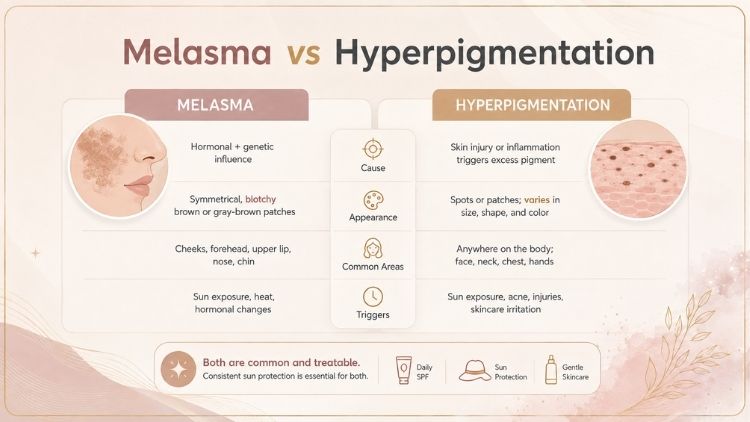
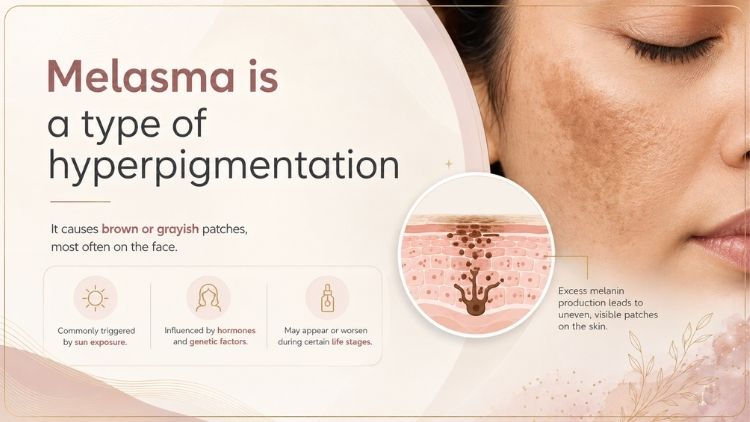
Melasma is a specific type of hyperpigmentation that causes symmetrical brown or grey-brown patches, usually on the face. Hyperpigmentation is a broader term describing areas of darker skin caused by increased pigment production, which is why melasma is considered one type rather than a separate category. Understanding the difference helps guide safer treatment choices and when medical assessment may be needed.
Melasma is a type of hyperpigmentation
The main difference between hyperpigmentation and melasma is that hyperpigmentation describes a broad group of pigment changes, while melasma refers to a specific pattern of symmetrical facial pigmentation. Sun and visible light, hormones and a genetic tendency can all contribute. It often behaves as a long-term condition that improves and then returns.
Other forms of hyperpigmentation include marks left after acne or eczema, freckles, sun-related lentigines, medication-related colour change and several medical skin conditions. Looking at the pattern, trigger, depth and behaviour of the pigment helps separate them.
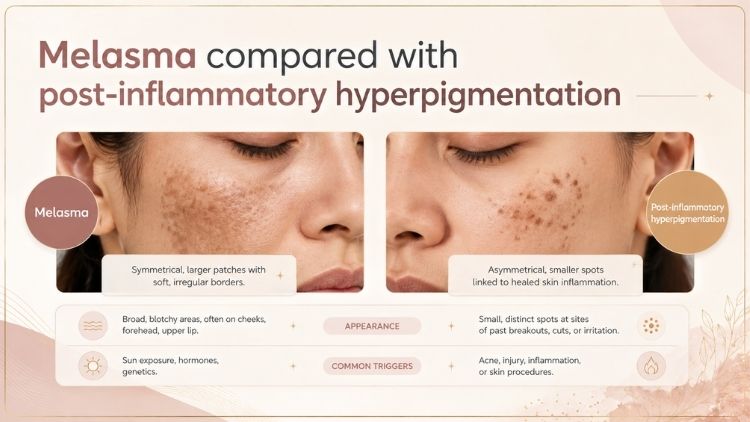
Melasma compared with post-inflammatory hyperpigmentation
Melasma and post-inflammatory hyperpigmentation can both appear as darker patches on the skin, but they develop for different reasons and often require different management approaches. Looking at the pattern, triggers and history of the pigmentation helps distinguish between these two common concerns.
Melasma
Melasma tends to be bilateral and patterned. You may notice similar areas on both cheeks or across the centre of the face. It is not usually caused by a single pimple or injury. Pregnancy, hormonal contraception, hormone therapy, family history and repeated light exposure may be relevant.
Post-inflammatory hyperpigmentation
Post-inflammatory hyperpigmentation, or PIH, appears after the skin has been inflamed or injured. It may follow acne, eczema, a burn, picking, an irritating product or a procedure. The mark usually sits where the original problem occurred, so its shape often traces the earlier inflammation.
You can have both conditions at the same time. For example, a background pattern of melasma may sit alongside individual dark acne marks. Treating the active acne or irritation is then just as important as addressing the pigment, because each new flare can create another mark.
How sun spots and freckles differ
Freckles are often small and become more noticeable with sun exposure. Solar lentigines, sometimes called sun spots, are usually more defined individual patches on areas that have received repeated ultraviolet exposure. Melasma is generally broader, more cloud-like and more symmetrical.
These descriptions can guide a conversation, but they are not a home diagnosis. A new, changing, irregular, itchy or bleeding pigmented spot needs medical assessment rather than cosmetic treatment. If one mark looks different from the rest, please mention it before any light, laser or peel is planned.
What can trigger or deepen melasma?
Ultraviolet light and visible light can stimulate pigment production. Heat may also be relevant for some people. Hormonal changes, pregnancy and hormone-containing medicines can contribute, while irritation from skincare or procedures can add a layer of post-inflammatory pigmentation.
This is why melasma can feel unpredictable. You may be diligent with treatment yet notice darkening after summer, travel, pregnancy or a period of skin irritation. A recurrence does not mean you have failed; it means the condition often needs a maintenance plan rather than a one-time removal mindset.
Why assessment comes before choosing a treatment
Dr Wong will assess the pigment pattern, colour and borders. He will also ask when it started, possible triggers and which products or procedures you have previously tried. Dermoscopy or other examination may help, and an unusual lesion may need a different medical pathway.
Depth also affects response. Epidermal pigment is closer to the surface, while dermal or mixed pigment is harder to change. If your skin has previously darkened after acne, burns or procedures, that history suggests we should be especially cautious about creating further inflammation.
The foundation: Daily light protection
For melasma and many other pigment concerns, consistent broad-spectrum SPF 50+ sunscreen is part of treatment, not only an aftercare step. A wide-brimmed hat, shade and reapplication when you are outdoors help reduce repeated stimulation. Tinted sunscreen containing iron oxides may provide additional visible-light protection.
Choose a sunscreen you can use comfortably every day. If a product stings, pills under makeup or leaves a finish you dislike, tell us. Finding a tolerable option is more helpful than owning a highly rated product that stays in the drawer.

Topical treatment may be considered first
Depending on the diagnosis, medical history and whether you are pregnant or breastfeeding, a plan may include ingredients that reduce pigment production, support skin turnover or control inflammation. Some prescription options are not suitable for everyone and require medical supervision.
More product is not necessarily more effective. Irritation can worsen PIH and make melasma harder to settle. Introduce active products at the frequency advised, moisturise if needed and contact the clinic if burning, swelling or persistent redness develops.
Where peels, IPL and lasers may fit
Chemical peels, IPL and laser treatments may be considered for selected pigment patterns, but they also create inflammation. In melasma and skin that develops PIH easily, aggressive energy or repeated irritation can lead to darkening, relapse or a more resistant pattern.
If a procedure is discussed, ask what type of pigment it is intended to address, how your skin will be prepared, what settings are being considered and what the plan is if the pigment becomes darker. Sometimes the gentler choice is to stabilise the condition with skincare and light protection before considering a device.
What improvement can realistically mean
Melasma often improves gradually and can return. A realistic goal may be softer, more even-looking pigment that is easier to manage, rather than permanent clearance. PIH can also fade slowly, especially when pigment sits deeper in the skin or new inflammation continues.
Consistent photographs are useful because daily mirror checks can exaggerate small changes. We can review whether the plan is helping, irritating your skin or simply needs more time, then adjust it without rushing into a stronger procedure.

When it may be better to pause
Pause new active products and seek advice if your skin is inflamed, peeling, painful or developing a rash. Procedures may need to wait during pregnancy, after recent tanning, while acne or eczema is active, or when the diagnosis is uncertain.
You can also decide that treatment is not a priority. Pigmentation is not a personal failing, and you do not have to pursue every possible option. We can help you focus on skin comfort, sun protection and monitoring if that better supports you.
How Dr Wong plans pigment care with you
Dr Wong considers the pigment pattern, your baseline skin tone, hormonal and medical factors, current skincare, previous reactions and the amount of time you can give a maintenance plan. He will also explain when another medical assessment or referral is more appropriate.
You should understand which diagnosis is most likely, what can be treated safely, what may recur and which steps matter most at home. The plan can be staged, and you can take time before deciding whether to add a procedure.
How W Medical Aesthetics approaches pigmentation treatment
Pigmentation treatment starts with understanding what type of pigment change is present and what may be contributing to it. At W Medical Aesthetics, Dr Wong considers your skin characteristics, medical history, previous reactions and long-term goals before discussing suitable options.
The approach may include skincare, light protection, monitoring or procedures when appropriate. The aim is to choose a plan that supports your skin while reducing unnecessary irritation or unsuitable treatments.

Frequently asked questions
Is melasma the same as hyperpigmentation?
Melasma is one type of hyperpigmentation. Hyperpigmentation also includes PIH, freckles, sun-related spots and other causes of darker colour. The pattern and trigger help determine which treatment approach makes sense.
Can melasma and PIH happen together?
Yes. A person can have both conditions together, which is why distinguishing post-inflammatory hyperpigmentation from melasma is important when planning treatment. The plan may therefore need to control inflammation while addressing the broader pigment pattern.
Can laser make melasma worse?
It can. Heat and inflammation from laser or light treatment may trigger darkening or relapse in susceptible skin. That does not rule out every procedure, but it makes diagnosis, conservative settings, preparation and follow-up particularly important.
What treatments are available for melasma and hyperpigmentation?
Treatment depends on the type of pigmentation, skin characteristics and individual triggers. Options may include skincare, sun protection, peels, IPL or laser treatments when appropriate. Dr Wong will assess whether a procedure is suitable before recommending an approach.
How long does pigment take to fade?
Timing varies with the cause, depth, skin tone, ongoing triggers and treatment tolerance. Melasma is usually managed over time, while PIH may fade as the skin recovers if new inflammation is prevented.
Melasma and hyperpigmentation are both very common
Melasma is a specific type of hyperpigmentation, while hyperpigmentation is a broader term for different causes of darker skin. Understanding the difference helps guide safer treatment decisions, as each pigment concern may respond differently.
Dr Wong can assess your pigmentation at W Medical Aesthetics in Adelaide and discuss an approach based on your skin characteristics, triggers and treatment goals.