A new or changing spot
Changes in size, shape or colour are reasons to seek medical assessment. Do not wait for every warning sign to be present.

Skin cancer check
Have moles, spots or skin changes assessed and understand any recommended next steps.
Request a skin checkA skin cancer check involves examining moles, spots or lesions that may need further assessment. Your doctor reviews areas you have noticed yourself and may use dermoscopy for a closer look.
A spot may need monitoring, testing or referral. A skin check does not mean a diagnosis of cancer, and visual examination alone does not confirm every diagnosis.
Changes in size, shape or colour are reasons to seek medical assessment. Do not wait for every warning sign to be present.
A history of significant UV exposure or sunburn can be relevant when your doctor assesses individual risk.
Tell your doctor about any previous skin cancer and relevant family history. This can affect follow-up recommendations.
Fair or sun-sensitive skin may be relevant to risk assessment. Skin cancer can also occur in people with other skin tones.
Many moles or lesions in areas that are hard to see may warrant discussion of a broader examination.
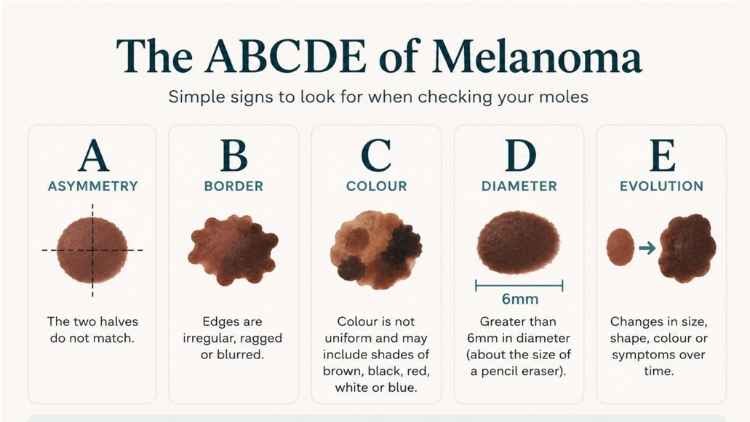
The ABCDE guide can help identify features that warrant closer assessment, but it is not a diagnostic test. Some melanomas do not fit this pattern.
Bleeding, itching, crusting, a sore that does not heal, or a new or changing spot should be discussed with a doctor. A lesion can need assessment even when it is smaller than 6 mm.
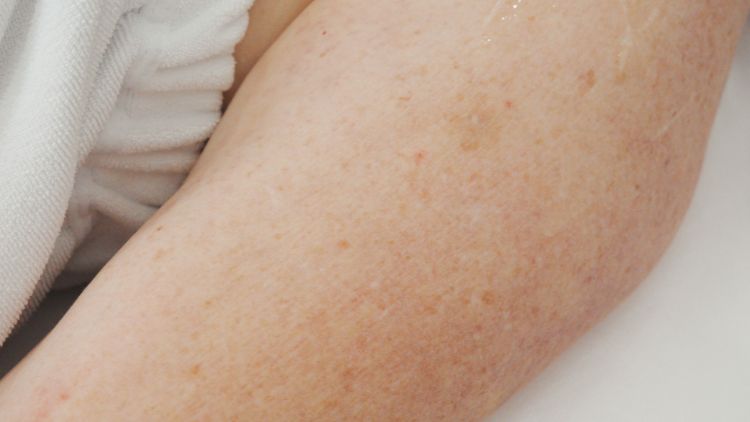
The extent of examination is discussed with you. Point out any spots that concern you, including changes on areas you cannot easily inspect yourself.
Discuss sun exposure, previous skin cancers, family history, relevant medicines and any spots or changes you have noticed.
Your doctor examines the skin, including difficult-to-see areas where appropriate and with your consent.
A dermatoscope may be used to examine selected lesions more closely. Notes or clinical images may be recorded when appropriate.
The doctor explains whether monitoring, testing or referral is recommended. You can ask questions about the findings and proposed plan.
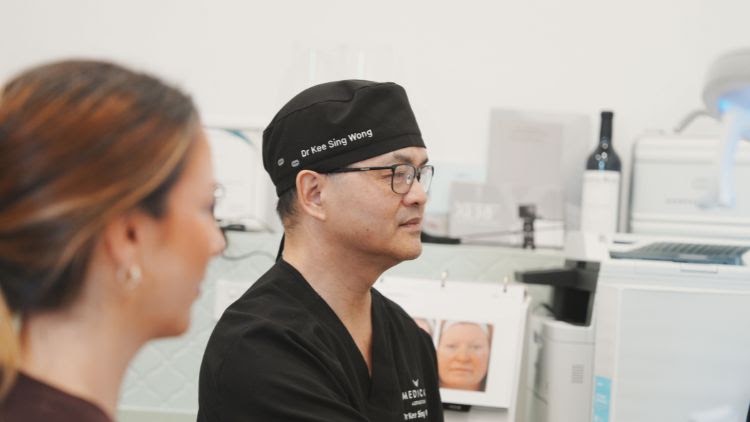
Follow-up frequency depends on individual risk factors and medical history. Your doctor can advise whether routine review is appropriate and how often it should occur.
Get to know your skin between appointments. If a new or concerning change develops, seek medical advice rather than waiting for the next scheduled check.
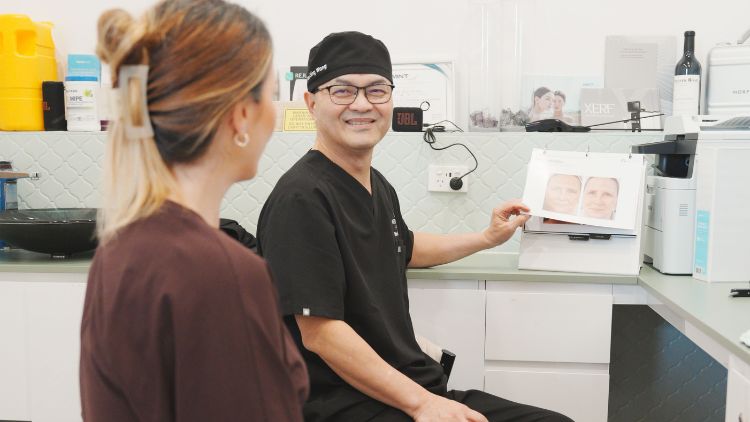
Your doctor will explain whether monitoring, biopsy or referral to an appropriate specialist is recommended. The next step depends on the lesion and clinical assessment.
A biopsy involves taking a tissue sample for pathology. Whether it is appropriate, where it can be performed and the relevant risks, fees and aftercare should be explained before you decide to proceed.
A normal examination does not guarantee that a new lesion cannot develop later. Report concerning changes and follow the agreed review plan.
At W Medical Aesthetics, your doctor reviews the skin concerns you raise and explains any recommended further assessment.
You can discuss the areas to be examined, ask questions and request an explanation of the next step. Do not assume that every spot requires removal.
Dr Kee Sing Wong, MBBS, FRACGP
Registered medical practitioner
AHPRA registration: MED0000996242
Registration status: Registered
Contact the clinic to confirm current fees and any applicable Medicare information before your appointment.
If testing, biopsy or referral is recommended, ask which additional fees or appointments may apply. Do not assume these are included in the initial consultation.
Appointment length depends on the extent of examination and whether any spots need closer assessment. The clinic can confirm the expected appointment time when you book.
A full skin examination allows review of areas that are difficult to check yourself. The extent of examination should be discussed with your doctor according to your history, risk factors and consent.
Loose, comfortable clothing that is easy to remove is helpful. Your doctor may ask you to undress as needed for examination and should discuss this with you.
You can ask about a specific mole or spot. Your doctor can advise whether a broader examination is appropriate based on your history and risk factors.
Take the next step
If you have noticed a new or changing spot, or want to discuss your individual risk, contact W Medical Aesthetics for an appointment.
Request a skin check