Sun spots
Flat brown marks may develop on the face, chest and hands after cumulative UV exposure. A changing or unusual spot needs medical assessment before cosmetic treatment.
Pigmentation
Review your pigmentation pattern, skin history and suitable options with W Medical Aesthetics.
Request a consultationA pigmentation consultation provides an opportunity to assess sun spots, melasma, post-inflammatory hyperpigmentation (PIH) and uneven tone. Identifying the pattern and its possible causes helps determine which options are appropriate.
Melasma and hormone-related pigmentation can worsen after unsuitable laser or light-based procedures. Assessment also considers pigment depth, rather than treating every brown mark in the same way.
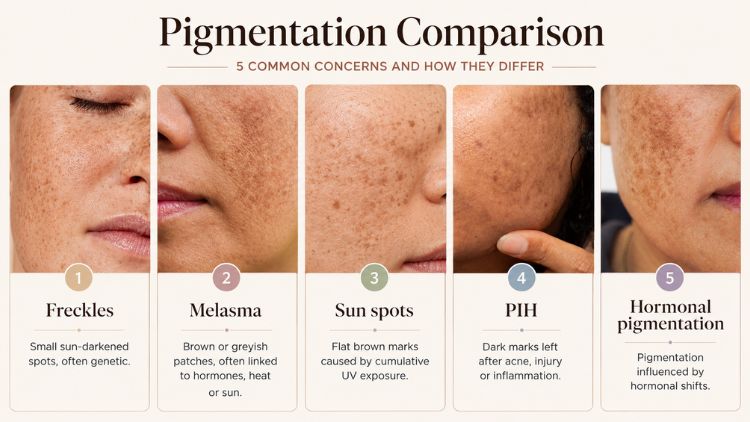
Flat brown marks may develop on the face, chest and hands after cumulative UV exposure. A changing or unusual spot needs medical assessment before cosmetic treatment.
Brown or greyish patches may be influenced by hormones and sun exposure. Melasma is prone to recurrence and generally requires ongoing management.
Small, often genetically influenced spots can darken with sun exposure. They are not necessarily the same as sun damage-related pigmentation.
PIH means dark marks remaining after acne, irritation, injury or inflammation has settled. Active inflammation may need attention first.
Pregnancy, hormonal contraception and other hormonal changes can influence pigmentation. This may overlap with melasma rather than representing a separate diagnosis.
Skin type, UV exposure, medications, hormonal factors and previous reactions can affect how pigmentation is managed. Some procedures may need to be delayed or avoided.
A new, changing or otherwise concerning lesion should be assessed medically before a cosmetic procedure is considered.
The appointment starts with clean-skin assessment and a review of pigmentation history, medications, recent sun exposure and previous reactions.
The clinic explains the role, limitations, relevant risks, recovery and costs of suitable options before anything is planned.
BBL or laser may be considered for selected sun spots and other pigmentation concerns. Melasma requires particular caution because unsuitable treatment can worsen pigmentation.
Selected peels and pigment-aware skincare may form part of a gradual approach to uneven tone. Skin sensitivity and barrier condition matter.
CO2 resurfacing may be considered when pigmentation occurs with texture or sun-related changes. It is a more intensive procedure with specific risks and recovery needs.
A different approach, a period of skincare and review, or no cosmetic procedure may be appropriate. There is no fixed procedure for every pigment pattern.
With some light- or laser-based procedures, treated pigment can temporarily darken before fading or shedding over the following days or weeks. This does not happen with every pigment type.
Individual responses vary. The number and spacing of appointments depend on pigment type, the procedure and recovery; further treatment is based on response and clinical need.
Temporary redness, warmth, swelling or sensitivity can occur. Pigmentation may become darker or uneven, particularly in melasma-prone skin or skin with a history of PIH.
Procedure-specific risks may also include burns, infection or scarring. Recovery and risks vary and should be explained before you decide whether to proceed. Contact the clinic about unexpected or worsening symptoms.
W Medical Aesthetics offers an assessment-led discussion of your pigmentation concerns. Dr Wong reviews your history and explains why an option may or may not suit your skin.
Dr Kee Sing Wong, MBBS, FRACGP
Registered medical practitioner
AHPRA registration: MED0000996242
Registration status: Registered
Ask the clinic to confirm consultation fees and provide an individual estimate for any recommended care. Costs depend on the option, area and plan discussed.
You can ask about alternatives, expected recovery and whether a broader skin consultation would better address concerns such as redness or texture.
Melasma is prone to recurrence and is usually managed over time with sun protection, appropriate skincare and, where suitable, clinical procedures. A permanent result cannot be promised.
Suitability depends on skin tone, pigment pattern, device and settings. Darker skin can be more prone to post-inflammatory pigment changes, so previous reactions and procedure history are reviewed before deciding whether laser or light-based care is appropriate.
There is no standard number for every pigmentation concern. Number and spacing depend on pigment type, the procedure used and how the skin responds between reviews.
Pigmentation can return because pigment-producing cells may respond again to UV exposure, hormonal changes or inflammation. The relevant triggers depend on the type of pigmentation.
Take the next step
Discuss the marks or changes you have noticed, your skin history and possible next steps with W Medical Aesthetics in Adelaide.
Request a consultation