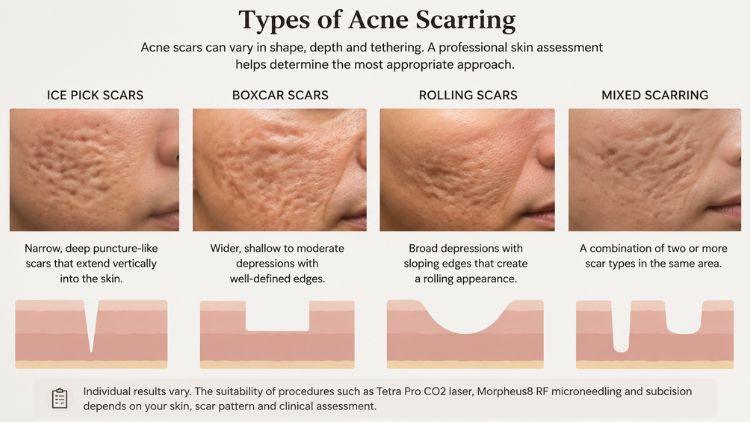
Acne scars can differ in depth, shape and structure. The first step is assessing the scar pattern, active acne, skin type and pigment history.
Scar depth, shape and tethering influence which approach may be appropriate. A procedure used for surface texture has a different role from one used for tethered rolling scars. Dr Wong assesses the scar pattern before discussing a starting point.
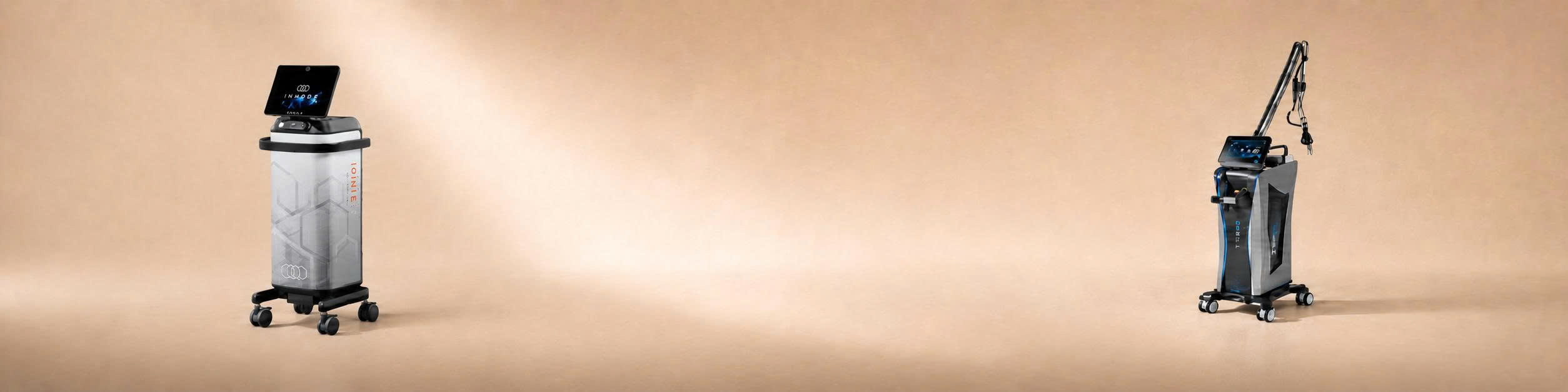
Tetra Pro CO2 laser resurfacing
Tetra Pro CO2 laser is a resurfacing procedure that may be considered for selected indented scars and uneven texture. Intensity is selected according to scar depth, skin characteristics and expected recovery time.
Lighter or more intensive settings may be discussed. Recent tanning, melasma, pigment history and healing response can affect suitability. CO2 resurfacing does not release fibrous bands beneath tethered rolling scars.
Morpheus8 RF microneedling
Morpheus8 combines microneedling with radiofrequency energy and may be considered for selected texture concerns and acne scars.
Temporary redness, swelling, roughness or pinpoint marks can occur. Settings depend on scar pattern, tissue thickness and the area assessed. Subcision may be considered where tethering is identified.
Subcision for tethered rolling scars
Subcision is a focused procedure used to release fibrous bands beneath selected tethered rolling scars. Whether tethering is present is assessed before the procedure is considered.
Bruising, swelling and tenderness can occur. After the area settles, resurfacing or RF microneedling may be discussed if residual texture remains.
Supportive skin-quality care
Supportive skincare and skin-quality options may be discussed when skin is reactive, dehydrated or recovering between procedures.
Their role is supportive rather than a substitute for procedures used for deeper or tethered scars.
1 / 4
What we assess before discussing a procedure
The assessment looks at the feature creating the visible indentation or texture. It distinguishes structural scars from colour changes, checks whether acne is active and identifies factors that may affect recovery or pigmentation risk.
Tethering or active inflammation may need to be addressed before resurfacing. Prominent pigment changes may require a different starting approach.
Scar type, depth and distribution
Whether rolling scars appear tethered
Active acne or recent inflammation
Skin tone, melasma and pigment history
Recent sun exposure, skincare and medications
Healing history and relevant medical factors
Different scar patterns may need different approaches. This is an educational guide, not a diagnosis or a before-and-after result.
What happens at an acne scar appointment
An appointment includes a final skin review, preparation of the area, the selected procedure and individual aftercare. Exact steps differ between CO2 laser, RF microneedling and subcision.
Skin review and confirmation
We check for changes in your skin, health, medications and recent sun exposure before confirming whether the procedure can proceed.
Preparation and comfort
The area is cleansed and prepared. Numbing or other comfort measures may be used where appropriate.
The selected procedure
CO2 resurfacing may feel warm or sharp, RF microneedling may involve pressure or heat, and subcision can cause pressure or tenderness.
Aftercare and review
Before you leave, the clinic explains aftercare and which changes should prompt contact. Further appointments are discussed after recovery and response are reviewed.
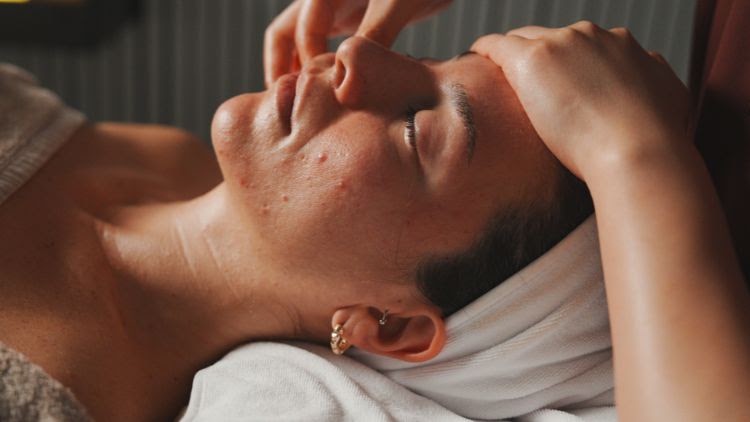
Illustrative clinical care. Preparation and the procedure depend on individual assessment; this image is not a treatment result.
Expected timeline and how changes are reviewed
Established acne scars are not expected to disappear completely. Visible change depends on scar type, depth, skin response and the procedure used. Deeper or tethered scars may remain visible after a procedure.
Changes are assessed after initial redness, swelling or peeling has settled. Resurfacing and collagen-remodelling procedures may continue to change in appearance over time, so review timing depends on the procedure.
Mixed scar patterns may require more than one procedure or approach. Response is reviewed after each stage before another appointment is considered.
Scar type and depth
Skin type and pigment response
Whether active acne is present
Procedure intensity and recovery
Healing and aftercare
Downtime, risks and aftercare
Recovery varies between procedures and between people. Lighter resurfacing may cause temporary redness, dryness and mild peeling. More intensive CO2 laser can produce visible redness, swelling, sensitivity, crusting or peeling. RF microneedling commonly causes redness, swelling, roughness and pinpoint marks. Subcision can leave tenderness and bruising.
Important risks can include infection, prolonged redness, pigment change, burns, delayed healing and additional scarring. RF microneedling has also been associated with uncommon but serious tissue or nerve injury. Dr Wong discusses risks relevant to the selected procedure, your skin and the treated area.
General aftercare may include
Cleanse only as directed.
Use the recommended moisturiser or recovery product.
Do not pick peeling, crusted or rough skin.
Pause retinoids, exfoliating acids and abrasive products until advised.
Avoid direct sun exposure and use broad-spectrum sunscreen as directed.
Avoid excessive heat, strenuous exercise and swimming for the advised period.
Avoid pressure or massage after subcision unless instructed.
Contact the clinic if pain, redness or swelling worsens, or if unexpected changes develop.
Acne scar assessment at W Medical Aesthetics
Dr Kee Sing Wong, MBBS, FRACGP, is a registered medical practitioner and Director of W Medical Aesthetics. AHPRA registration: MED0000996242. Registration status: Registered.
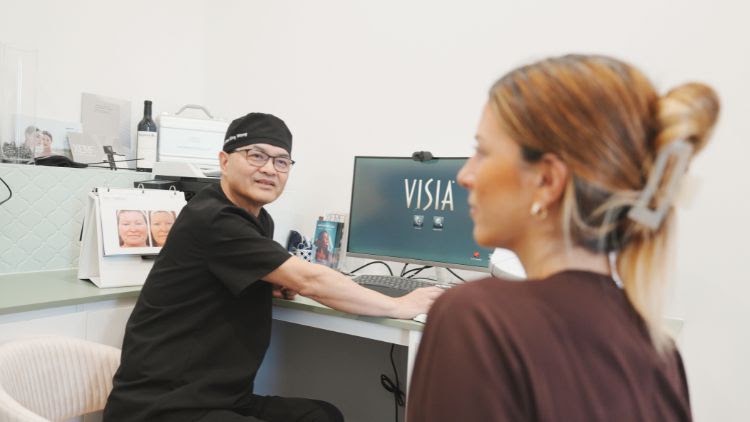
Dr Wong leads the assessment of scar type, active acne, pigment history and procedure suitability. Where more than one scar pattern is present, options can be discussed in stages rather than as a fixed package.
The clinic explains the role, limits, recovery and relevant risks of each option before anything is planned.
Costs discussed after assessment
Costs depend on the procedure, area, intensity and number of appointments discussed after assessment. A focal subcision appointment has a different scope from full-face CO2 resurfacing or RF microneedling.
W Medical Aesthetics provides relevant costs after the scar assessment, once appropriate options have been discussed.
Consultation considers skin history and appropriate next steps. This image does not show or predict treatment outcomes.
Frequently asked questions about acne scar procedures
Can acne scars be removed completely?
Established acne scars are not expected to disappear completely. The degree of visible change varies with scar type, depth, procedure and individual skin response. These limits are discussed during assessment.
Which procedure may suit different acne scars?
No single procedure suits every scar pattern. CO2 resurfacing may be discussed for selected texture concerns, RF microneedling for some uneven scars, and subcision where tethering is identified. Mixed patterns may need a staged approach.
How many acne scar appointments will I need?
The number of appointments cannot be confirmed from a photograph alone. Scar depth, procedure type, recovery and response to the first appointment all affect whether another stage is appropriate.
Are acne scar procedures suitable for every skin type?
No procedure is automatically suitable for every skin type. Recent tanning, melasma, pigmentation history, active inflammation, medication and previous healing reactions can change the risk of CO2 laser, RF microneedling or subcision.
Can BBL treat acne scars?
BBL may be considered for selected post-acne redness or pigmentation, but it does not address structural tethering or the depth of indented scars in the same way as subcision, CO2 resurfacing or RF microneedling.
Take the next step
Book an acne scarring consultation in Adelaide
A consultation begins by identifying whether the main concern is indentation, tethering, pigmentation, active acne or a mixed scar pattern. W Medical Aesthetics can then discuss which procedures, if any, may be appropriate.
General information only. Individual suitability, visible change, recovery, risks and maintenance needs vary. A consultation is required before any treatment is recommended.